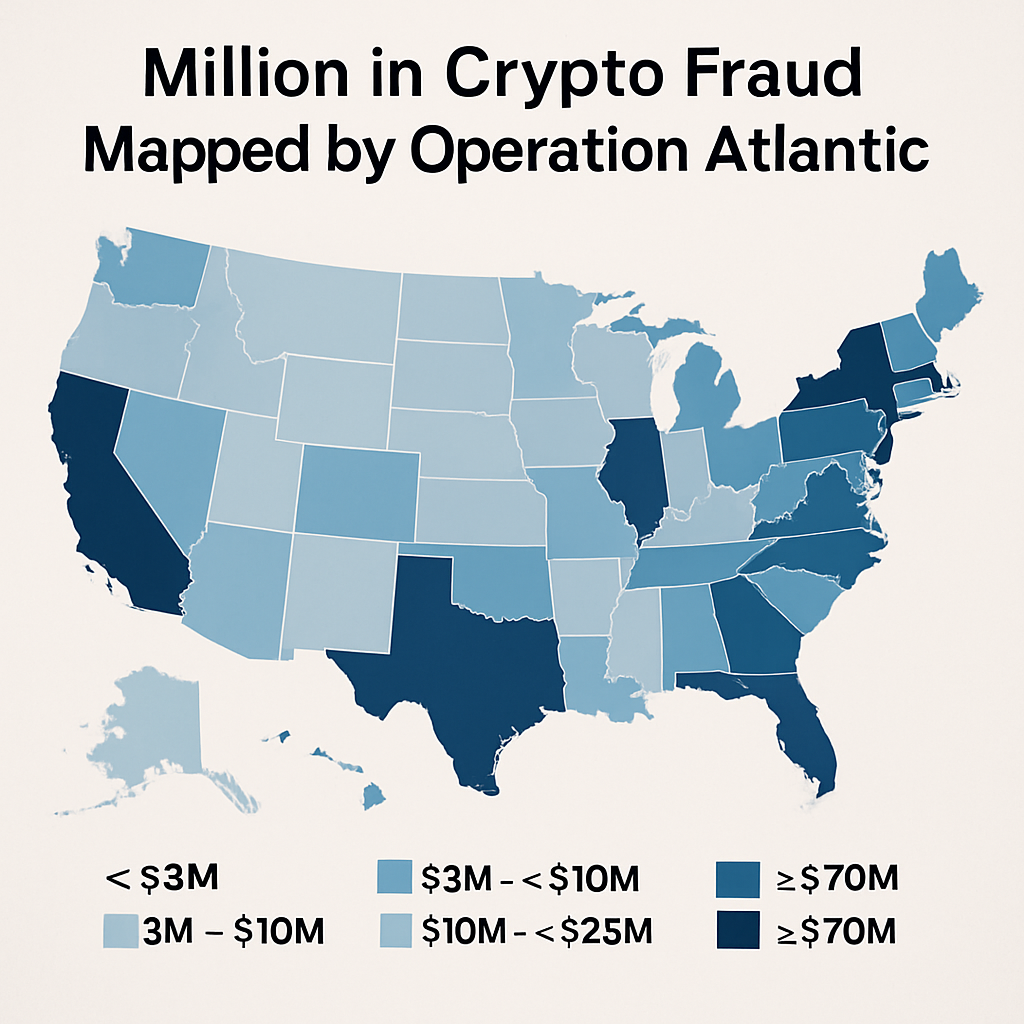
International law enforcement agencies have concluded Operation Atlantic, a targeted crackdown on approval phishing networks responsible for widespread crypto scams. The UK’s National Crime Agency (NCA), alongside partner agencies in the United States and Canada, coordinated intelligence sprints that yielded seizure-ready packages linked to multiple fraud rings. Combined data indicates over $45 million in identified illicit proceeds and the identification of 20,000 victims who fell prey to approval phishing schemes.
Approval phishing involves scammers duping victims into approving transactions via malicious dApps or wallet interfaces, enabling unauthorized transfers of funds. Investigations traced sophisticated networks exploiting social engineering to lure victims into granting wallet permissions, often on decentralized exchange interfaces. Following intelligence sharing, authorities executed simultaneous actions that froze approximately $12 million in suspected criminal proceeds held in various wallet clusters.
Operation Atlantic’s key outcomes include:
- 20,487 confirmed victims across the US, UK and Canada
- $45.2 million in loss schemes identified
- $12.4 million in criminal proceeds frozen
- Disruption of five major phishing networks
Victim profiles ranged from retail investors lured by counterfeit airdrop promotions to high-net-worth individuals targeted via impersonation of legitimate DeFi protocols. Law enforcement agents leveraged on-chain analytics from private sector partners to map transaction flows and cluster wallet addresses associated with known wallets used by suspects. Cross-border cooperation expedited asset freezes and victim notifications, with over 3,500 alerts sent to at-risk individuals, preventing further losses estimated at $2.1 million.
The operation underscores the critical role of collaboration between public and private sectors in combating crypto-enabled financial crime. Authorities credit real-time sharing of blockchain forensic intelligence and rapid deployment of multi-jurisdiction task forces for the swift disruption of organized fraud cells. Next steps include leveraging emerging regulatory frameworks to mandate stronger wallet provider controls and user education initiatives to reduce phishing vulnerability.
Comments (0)