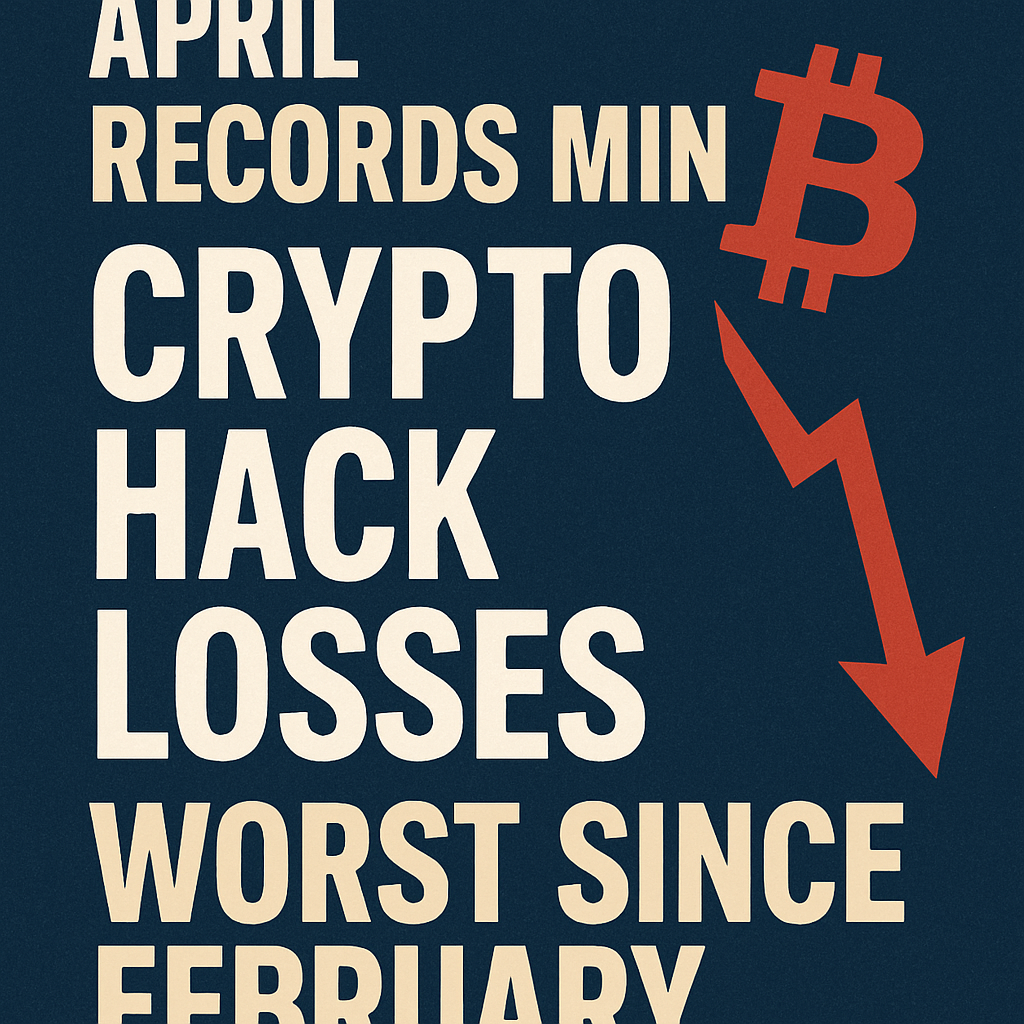
DefiLlama data shows that twelve crypto hacks between April 1 and April 18, 2026 resulted in cumulative losses of $606.2 million, a sum nearly 3.7 times larger than combined monthly losses for January through March of the same year. BeInCrypto reported that each of the prior thirteen months since February 2025 held under $240 million in hack losses, making April’s total an unprecedented surge for the ecosystem. KelpDAO’s rsETH bridge exploit on April 18 drained $292 million, and the earlier Drift Protocol exploit on April 1 accounted for an additional $285 million, together representing 95 percent of April’s losses.
A detailed breakdown reveals January’s losses at $100.1 million, February’s at $24.2 million, March’s at $41.3 million, and April’s at $606.2 million as of April 18, bringing total industry losses to $771.8 million year-to-date. The significant month-over-month jump underscores attackers’ pivot toward DeFi infrastructure and bridges, a vulnerability that has become the focal point of high-value exploits in 2026. The rapid increase in exploit frequency has outpaced security audits and risk-pricing mechanisms within the decentralized finance landscape.
The surge in hack losses has triggered market-wide disruptions. DeFi total value locked (TVL) fell by over 7 percent within 24 hours of the KelpDAO exploit, with major protocols such as Aave seeing TVL declines from $26.4 billion to $17.9 billion. Emergency freezes on lending markets and token integrations have become common as developers scramble to contain contagion risk. Analysts warn that evolving exploit tactics necessitate continuous security audits and multi-layer verification across bridges and cross-chain messaging networks.
Industry response has emphasized the need for decentralized verifier networks (DVNs) with multi-node consensus to prevent single-point-of-failure scenarios. Security teams now advocate for redundant RPC nodes, enhanced DDoS protection, and strict integration checklists for bridge configurations. Protocols are initiating bounty programs, code audits, and community-led stress tests to shore up defenses against sophisticated state-sponsored actors. The current landscape illustrates that hack frequency and severity will remain elevated until systemic security improvements are adopted across the DeFi stack.
Community sentiment has shifted toward caution, with treasury managers rebalancing risk exposures and limiting bridge interactions. The collective impact of nearly $771.8 million in losses year-to-date raises questions about sustainability and trust in onchain financial infrastructure. As DeFi matures, the industry is at a crossroads where security culture, risk management, and protocol governance must evolve in tandem to prevent future exploits of this magnitude.
Comments (0)