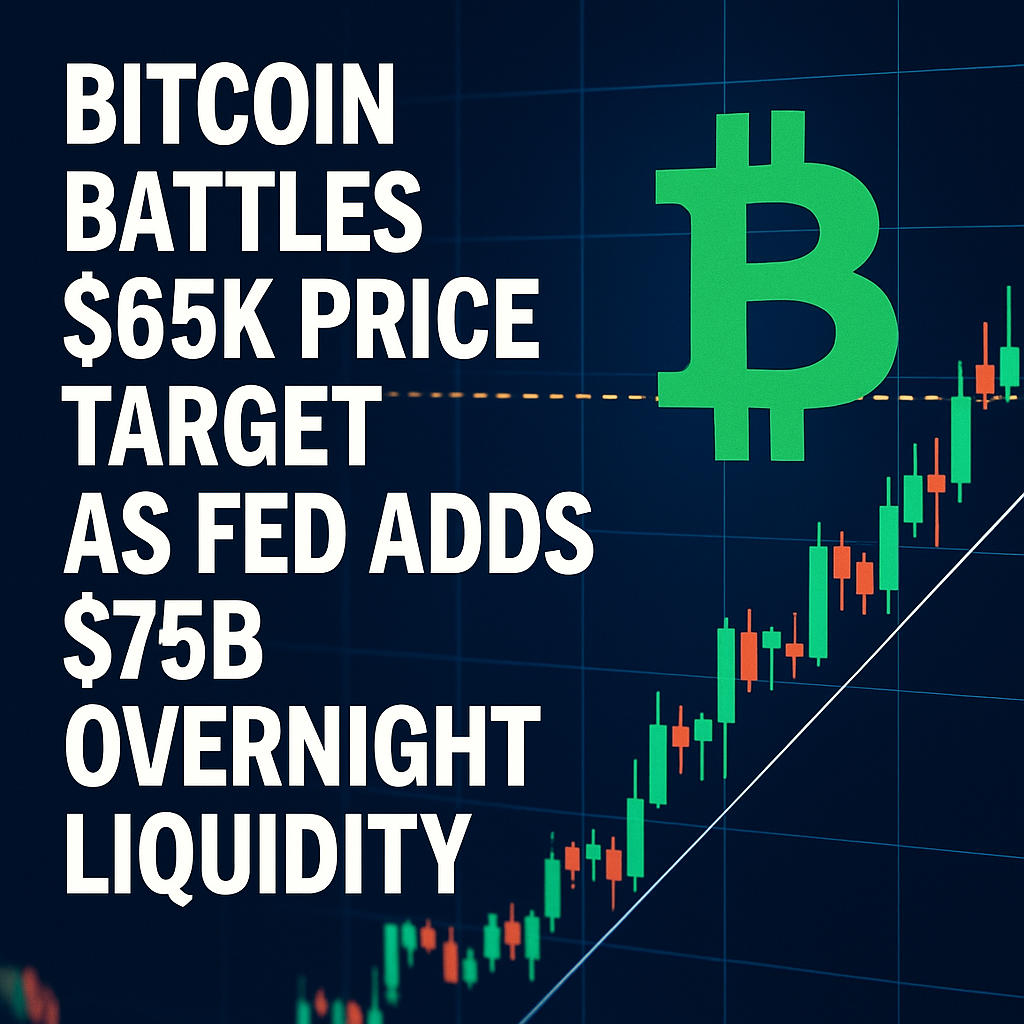
Federal Reserve liquidity operations delivered a significant impulse to risk assets as quantitative tightening paused with a $13.5 billion repo injection on December 1. This marked the second-largest overnight liquidity boost since the start of the COVID-19 crisis, signaling a shift in central bank policy stance. Market participants interpreted the move as an early end to balance sheet reduction for 2025, prompting inflows into stocks and digital assets.
Bitcoin led the response, rallying toward the $50,000 price target as macro bulls regained confidence. Historical data indicates that repo injections of this magnitude have coincided with sustained asset price rallies. Analysts highlight the correlation between Fed balance sheet expansions and cryptocurrency valuations, noting that increased dollar liquidity often translates into higher risk-asset allocations.
Trading desks reported elevated bid-ask spreads alongside higher volumes on major cryptocurrency exchanges. Implied volatility metrics for Bitcoin futures rose modestly, reflecting cautious optimism. Options markets priced in a 30-day realized volatility estimate of 70%, up from recent lows, suggesting traders anticipate moderate price swings despite the liquidity surge.
Market strategists caution that the liquidity boost may be counterbalanced by anticipated rate cuts. CME Group FedWatch data indicates high probability of a 25 basis-point cut at the December 10 FOMC meeting. Yen carry trade dynamics and Bank of Japan policy divergence also influenced cross-asset correlations, with JPY-denominated crypto flows observed in Asia trading sessions.
Onchain metrics showed stablecoin supply growing by 4% in 24 hours, driven by increased USD Tether and USDC minting. Active addresses on Bitcoin network climbed 12%, reflecting renewed onchain engagement. Liquidations in perpetual futures markets declined by 30%, indicating improved market stability post-injection.
Strategic outlook suggests that if Bitcoin sustains above $48,500, momentum could propel it toward the $52,000 resistance level. Conversely, failure to hold current levels may lead to consolidation near $45,000. Institutional hedging via options spreads and volatility swaps may increase as markets adjust to evolving policy signals.
.
Comments (0)