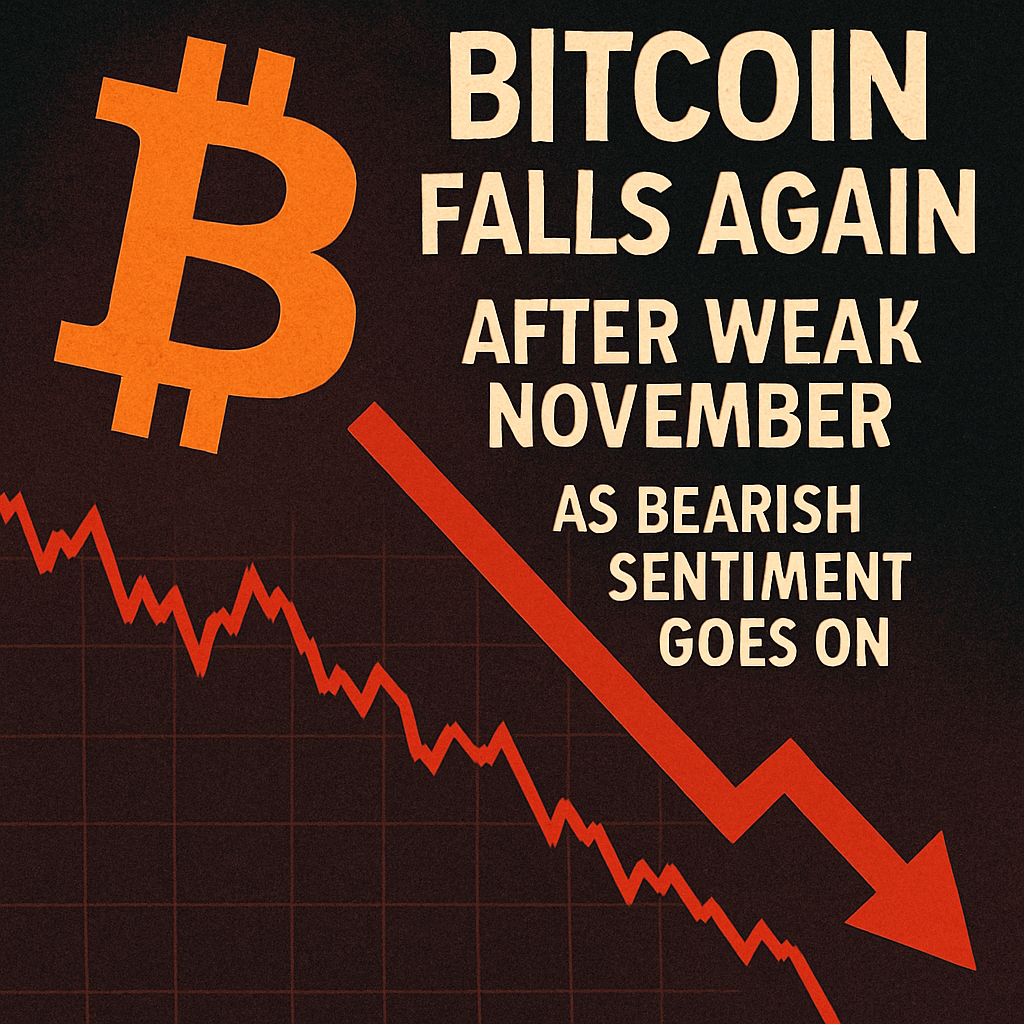
November decline compounds December sell-off
Bitcoin endured significant pressure on December 1 as the benchmark cryptocurrency lost 6% of its value, sliding from roughly $90,000 to $85,788. That move extended a broader downtrend that wiped more than $18,000 off Bitcoin’s price during November, marking the worst monthly performance since mid-2021. Record ETF outflows and forced liquidations approaching $1 billion exacerbated the pullback, as traders struggled to maintain leveraged positions amid thin liquidity.
Risk aversion dominated global markets, with correlations between Bitcoin and technology equities tightening. Shares of Strategy (MSTR.O), the largest corporate Bitcoin holder, fell 3.3% after the company cut its 2025 earnings forecast, citing the sustained weakness in the cryptocurrency. Analyst commentary highlighted fading enthusiasm as the primary driver, suggesting that lingering macro uncertainties and rising concerns over market concentration dampened investor appetite.
Derivatives and on-chain signals
On-chain indicators pointed to capitulation among some longer-term holders, while open interest in Bitcoin futures on major exchanges declined by approximately 12% over the past week. Perpetual swap funding rates turned negative, signalling growing bearish conviction among leveraged traders. Volatility measures spiked, with the Bitcoin volatility index rising above its one-year average, reflecting expectations of outsized moves into year-end.
Technical analysis showed Bitcoin probing key support in the $84,000–$86,000 band, where traders previously accumulated more than 400,000 BTC in late October. Failure to hold that level could expose the market to deeper retracements toward $80,000. Conversely, a sustained reclaim above $90,000 would be needed to validate any bullish reversal heading into 2026.
Outlook and macro drivers
Strategists maintained a cautious stance, noting that the Federal Reserve’s imminent rate cut would likely remain a key catalyst. The market awaits FOMC decisions on December 9–10, with most forecasts pointing to a 25 bps reduction. However, analysts warned that front-loaded easing could limit subsequent policy flexibility, potentially dampening the anticipated liquidity tailwind for risk assets.
Stablecoin dynamics and liquidity flows will also merit close monitoring. Elevated redemption requests from money markets and outflows from USDT and USDC could amplify volatility, especially if traders rotate into fiat amid extreme risk-off periods. Onchain data revealed net transfers from exchanges to cold wallets, suggesting some accumulation by long-term holders despite the overall downtrend.
In summary, Bitcoin’s recent decline underscored a shift toward extreme fear in digital asset markets, with both technical and fundamental factors converging to weigh on prices. The coming weeks will test whether easing monetary conditions can offset waning speculative demand and provide a platform for renewed risk-taking.
Comments (0)