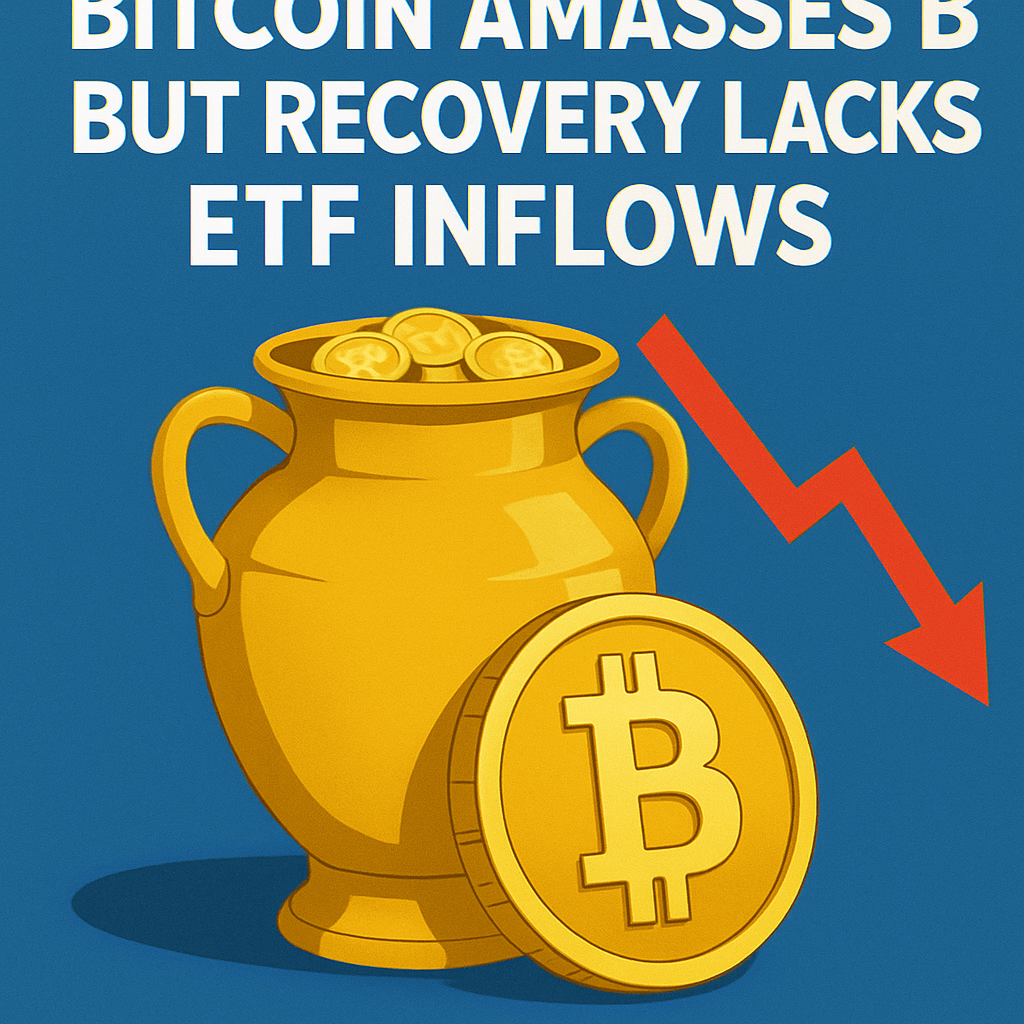
Bitcoin “Money Vessel” Sees $8 Billion Boost in Realized Cap; ETF Flows Stall
Recent on-chain metrics reveal that Bitcoin’s realized capitalization increased by over $8 billion to exceed $1.1 trillion, reflecting strong accumulation by investors and miners despite bearish market sentiment following a $19 billion crypto market crash. The realized cap metric aggregates the value of coins at their last movement price, offering insight into investor commitment.
Drivers of Recent Inflows
CryptoQuant data indicates that the bulk of the inflows originated from large Bitcoin treasury companies and exchange-traded funds (ETFs), which have historically been primary demand channels. However, ETF net inflows have slowed in recent days, and major treasury holders like MicroStrategy have paused new acquisitions, limiting price momentum.
Ki Young Ju, CEO of CryptoQuant, noted that renewed ETF activity and institutional setups will be crucial to sustain a bullish trend. “If ETFs and major corporate holders resume significant purchases, market momentum is likely to return,” Ju stated in an X post on Sunday.
Mining Sector Expansion
Bitcoin miners have also contributed to the realized cap rise by expanding operations and deploying new application-specific integrated circuits (ASICs). American Bitcoin, a miner linked to the Trump family, recently acquired over 17,000 ASIC units valued at $314 million, signaling long-term confidence in network fundamentals.
A rising hash rate not only secures the network but also indicates miner optimism about future price appreciation. This operational expansion continues amid efforts to improve energy efficiency and reduce production costs.
Price Outlook and Catalysts
Despite strong on-chain accumulation, Bitcoin’s price recovery has been constrained around $110,000. Analysts from Bitfinex project that a resurgence of inflows—estimated between $10 billion and $15 billion—alongside potential Federal Reserve rate cuts could drive prices toward $140,000 in November.
Key macroeconomic factors include upcoming monetary policy decisions, U.S.-China trade developments and seasonal market strength. Risks remain elevated around tariff negotiations and geopolitical tensions, which could trigger volatility.
Overall, the divergence between on-chain demand and ETF-driven capital flows underscores the importance of institutional participation for sustained price advances. Market participants will watch ETF filings, treasury announcements and central bank signals for clues to the next significant move.
Comments (0)