Legislative Context
The Digital Asset Market Transparency Act, commonly known as the Clarity Act, is slated for markup before the U.S. Senate Banking Committee on January 15, 2026. The legislation aims to establish a comprehensive regulatory framework for digital asset market structure, addressing market manipulation, trading transparency, and the definition of digital commodities. Initial drafts offered broad protections for decentralized finance applications, but subsequent amendments introduced by Senate staff have sparked controversy within the crypto community.
Company Positions
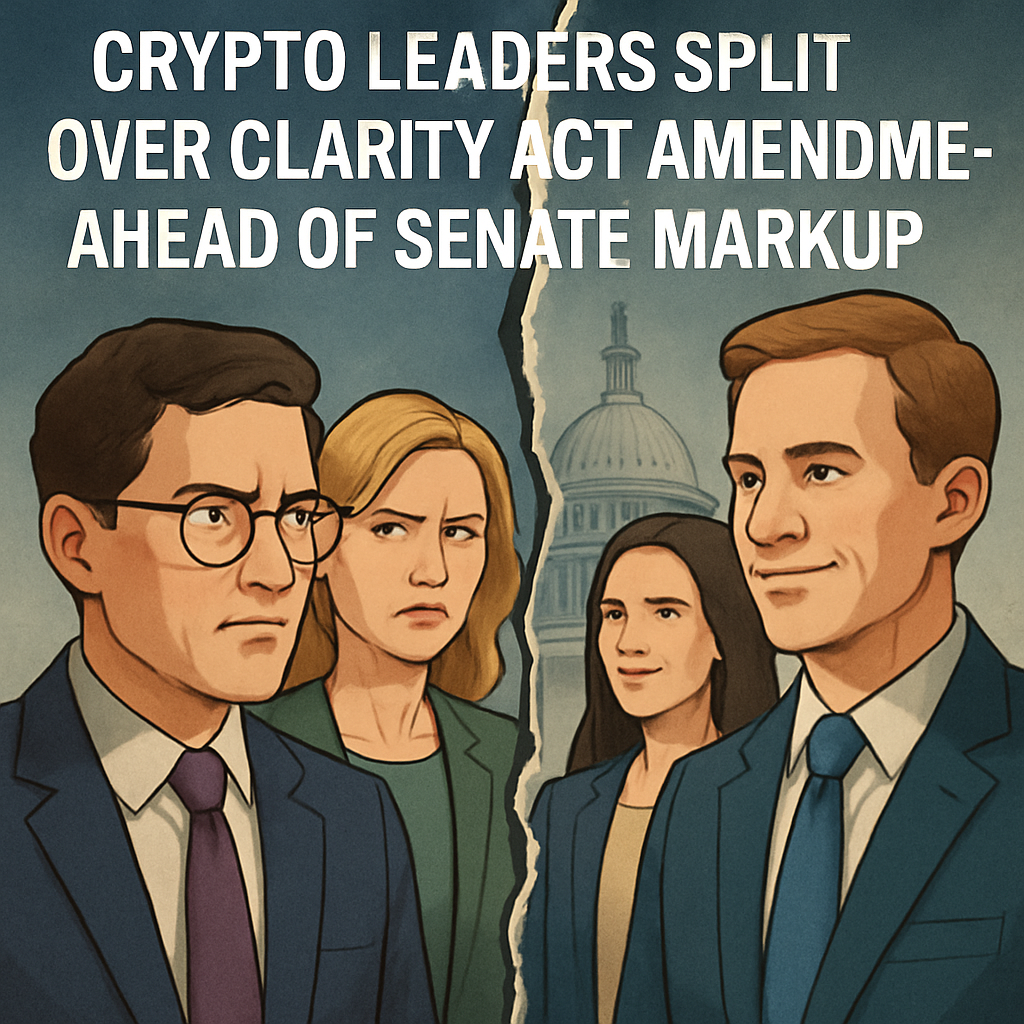
Coinbase Global Inc. publicly retracted its endorsement of the Clarity Act on January 14, 2026, citing material concerns with the revised amendments. CEO Brian Armstrong stated that the current version of the bill would result in a regulatory environment more restrictive than the status quo, potentially stifling innovation. In contrast, Ripple Labs CEO Brad Garlinghouse and Coin Center Executive Director Peter Van Valkenburgh affirmed support for the markup process, viewing the bill as a step toward legal certainty for market participants.
Banking Sector Influence
Reports indicate that the banking lobby successfully inserted amendments to preserve incumbent financial institutions’ market share in digital custody and settlement services. Provisions favoring bank-regulated custodians have drawn criticism from non-custodial wallet providers and decentralized exchange protocols. Traditional banks assert that stricter custody rules are necessary to safeguard investors, while opponents argue that such measures undermine decentralized custody models central to Web3 development.
Key Debate Points
- Custody Requirements: Debate over whether retail-facing platforms must partner with FDIC-insured custodians or can maintain non-custodial operations.
- Market Surveillance: Proposals for increased on-chain data reporting to regulators versus privacy concerns raised by decentralized protocols.
- Stablecoin Definitions: Clarifying the legal status of algorithmic stablecoins and their reserve structures.
- DeFi Licensing: Discussion on whether DeFi platforms should obtain federal licenses akin to broker-dealer registrations.
Potential Outcomes
If passed, the Clarity Act could provide the first federal standard for digital asset classification, reducing legal ambiguity that has hampered institutional adoption. A favorable markup may lead to expedited floor votes, while a hostile revision could push legislators to draft competing bills. Industry groups anticipate that an improved bill could pave the way for spot cryptocurrency ETFs and new DeFi product approvals.
This episode highlights the complex interplay between innovation, regulation, and legacy financial interests as lawmakers craft the future of U.S. digital asset policy. This episode highlights the complex interplay between innovation, regulation, and legacy financial interests as lawmakers craft the future of U.S. digital asset policy. This episode highlights the complex interplay between innovation, regulation, and legacy financial interests as lawmakers craft the future of U.S. digital asset policy. This episode highlights the complex interplay between innovation, regulation, and legacy financial interests as lawmakers craft the future of U.S. digital asset policy.
Comments (0)