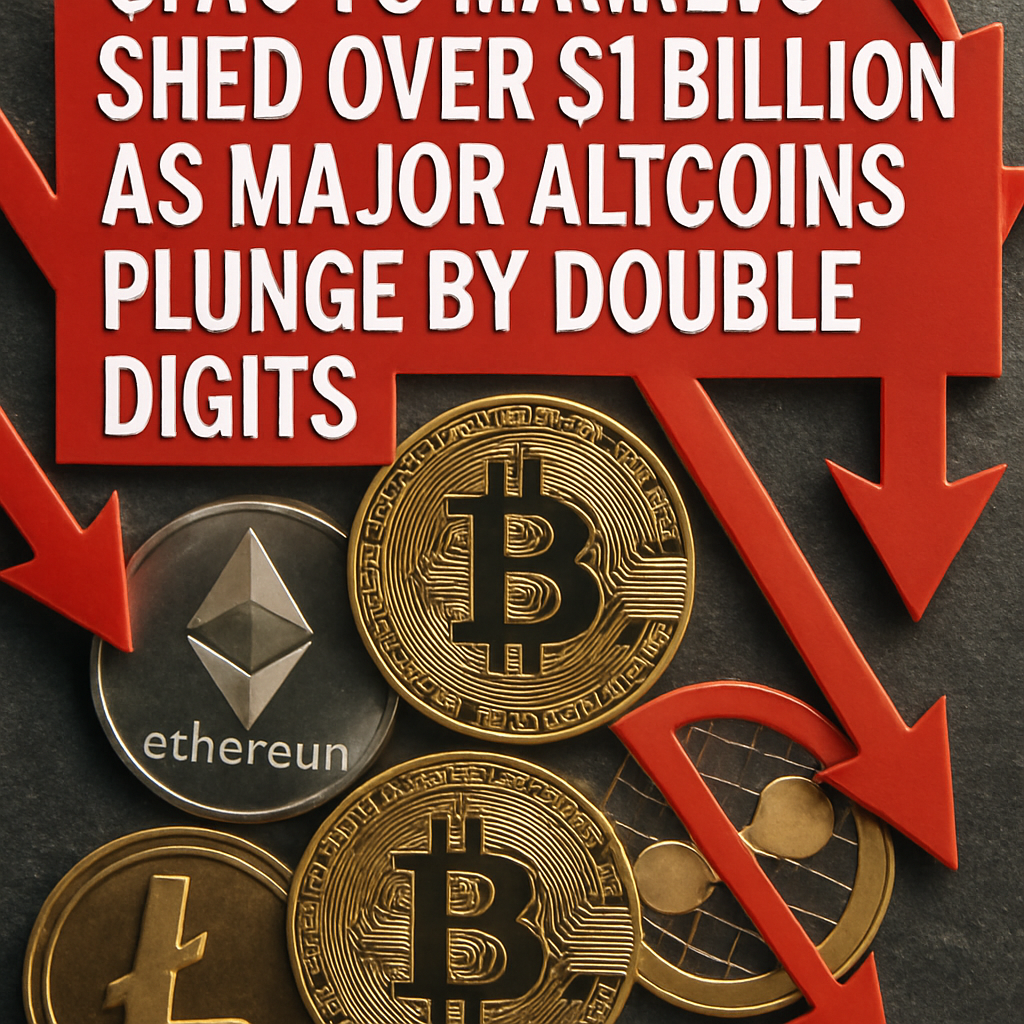
On January 19, 2026 at 18:18 UTC, the broader cryptocurrency market experienced a significant contraction, with total market capitalization dropping by over $100 billion within 24 hours. The sell-off followed a calm weekend trading session, but geopolitical developments—particularly threats of reciprocal tariffs between the United States and the European Union—sparked risk-off sentiment across both traditional and digital asset markets.
Bitcoin, the largest cryptocurrency by market cap, slipped from its early-week highs near $95,000 to trade just under $92,000 at the time of the downturn. The renewed downside break triggered algorithmic selling and forced liquidations, further accelerating the decline. According to on-chain data, leverage positions worth hundreds of millions were automatically closed as the spot price fell below critical support levels, compounding the market-wide sell-pressure.
Large-cap altcoins suffered even steeper losses. Data from CoinMarketCap showed SUI leading the decliners with a 12.5 percent drop to $1.55, followed by APT at 11.4 percent, ONDO at 10.8 percent, ARB at 10.6 percent, PEPE at 10.4 percent, and ENA at 10.3 percent. Exceptions included privacy-focused tokens such as XMR and ICP, which bucked the trend with modest gains of 6 percent and 4 percent respectively, as capital rotated into perceived safe-haven assets within the crypto ecosystem.
The total realized loss across derivatives markets was estimated by CryptoGlass to exceed $875 million in forced liquidations. Among those, Bitcoin positions accounted for $224 million, XRP for $39.5 million, and Ethereum derivatives saw outflows of $178 million. Liquidation heatmaps indicated that long positions bore the brunt, underscoring the asymmetric impact of rapid downside moves on leveraged bulls.
Institutional product flows showed a contrasting trend. Despite the turbulence, US-listed Bitcoin spot ETFs recorded $1.2 billion in net inflows over the same period, reflecting continued strategic allocation by large investors. Grayscale Bitcoin Trust reported a $800 million inflow, while Ethereum ETF vehicles attracted $45 million, illustrating that even with heightened volatility, institutional demand for core assets remained intact.
Market analysts pointed to the weekend announcement of potential EU retaliatory tariffs worth €93 billion, which rattled equities and safe-haven metals alike. Gold prices surged toward a record high of $4,700 per ounce, while silver peaked above $80. The correlation between traditional risk assets and cryptocurrencies was reaffirmed, as risk-off flows extended across multiple asset classes simultaneously.
Looking ahead, traders will be monitoring whether Bitcoin can reclaim the $94,500 resistance zone—a level that defined consolidation between November and January—or if the breakdown signals a deeper corrective phase. Technical indicators such as the 365-day moving average at $101,000 remain key barometers for trend reversal, but geopolitical catalysts are expected to continue driving episodic volatility in the near term.
Comments (0)