Incident Overview
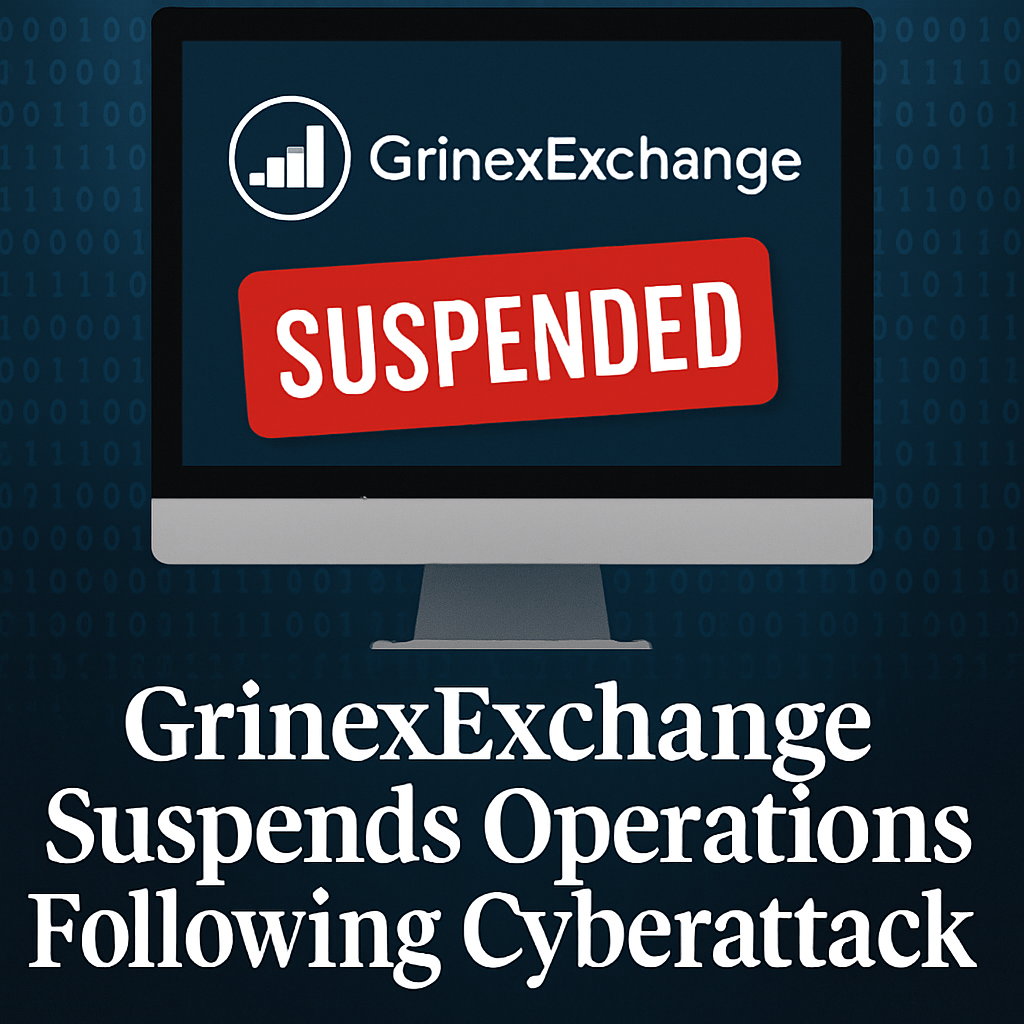
On April 15, 2026, Grinex exchange announced the suspension of all trading and withdrawal services after detecting a large-scale cyberattack. The breach resulted in the theft of over 1 billion Russian rubles (approximately $13.74 million) in user funds, primarily denominated in the A7A5 ruble-backed stablecoin.
Attribution and Motivations
A joint investigation by Elliptic and TRM Labs revealed forensic evidence indicating advanced tactics typically exclusive to state-level intelligence agencies. Grinex’s public statement blamed “Western intelligence” for orchestrating the attack with the specific objective of undermining Russia’s financial sovereignty.
Historical Context
Grinex is widely regarded as a successor to Garantex, which was sanctioned by the U.S. Treasury in April 2022 for laundering illicit proceeds through darknet markets. Following renewed sanctions in August 2025, Garantex is believed to have reincorporated as Grinex to evade regulatory restrictions.
Operational Impact
- Suspended all deposit and withdrawal functions immediately upon detection.
- Locked user accounts pending infrastructure security audits.
- Reportedly redeployed backend services to sandbox environments to curb further breaches.
Response and Recovery
Grinex engaged multiple cybersecurity firms and law enforcement agencies to trace stolen assets through TRON and Ethereum networks. Chainalysis identified rapid conversions from USDT to TRX and ETH to bypass asset-freeze mechanisms enforced by Tether.
Geopolitical Implications
The incident highlights persistent risks faced by exchanges operating in sanction-prone jurisdictions. Experts warn that such breaches may be leveraged as false-flag operations to justify expanded sanctions or diplomatic measures.
Recommendations for Users
- Revoke smart-contract approvals granted since April 14.
- Monitor on-chain activity for suspicious fund movements.
- Consider off-chain custodial solutions for sanctioned exchanges.
Grinex has yet to announce a timeline for service restoration. Stakeholders continue to assess the long-term impact on cross-border crypto trade and sanctions-evasion channels.
Comments (0)