Overview
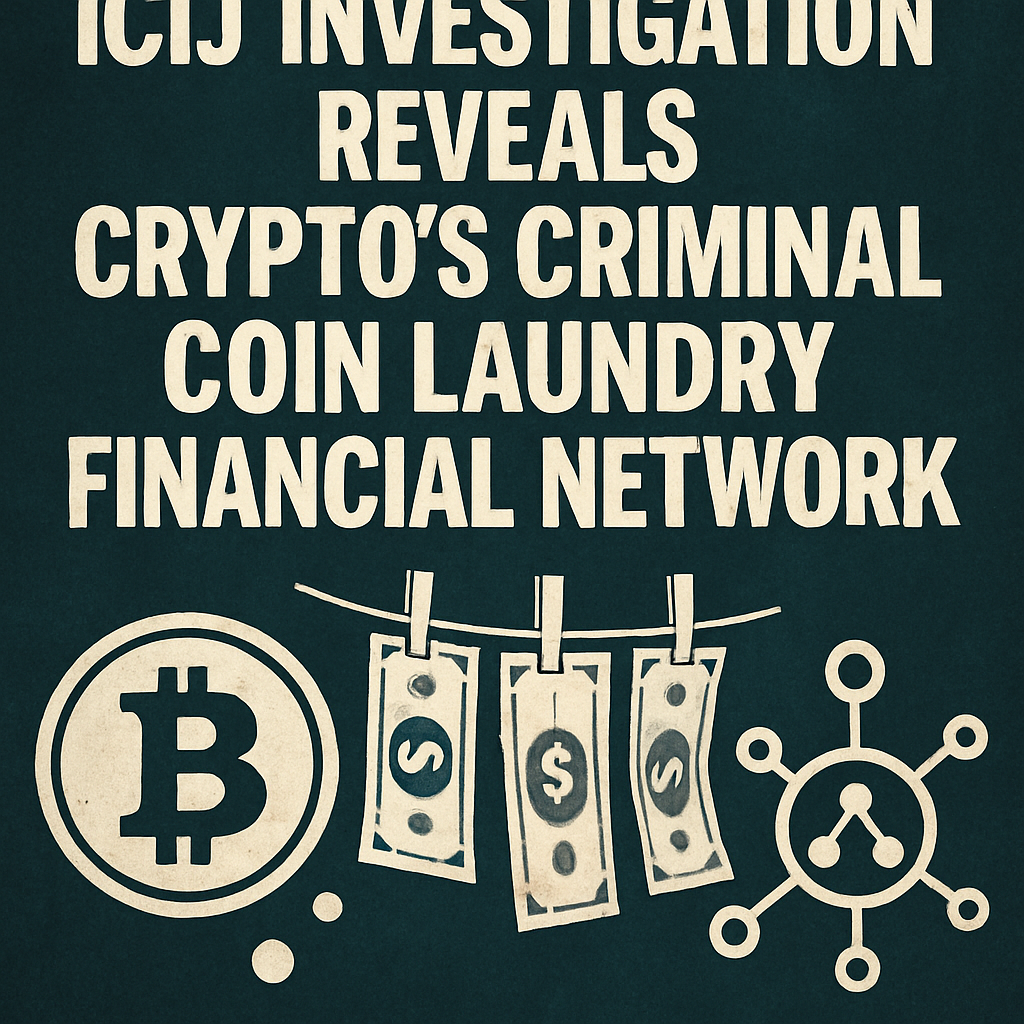
The International Consortium of Investigative Journalists (ICIJ) published a multi-part series uncovering a sprawling clandestine financial mechanism dubbed 'Coin Laundry'. The investigative group documented clandestine channels used to launder illicit funds through cryptocurrency platforms and shadow banking operations.
Major crypto exchanges were implicated in the facilitation of money laundering operations conducted by organized criminal groups. Evidence gathered during the investigation indicated that transactions linked to drug cartels, people trafficking rings and sanctioned entities passed through Binance, OKX, Coinbase, Kraken, Bybit and Kucoin.
Collaborative Investigation
A coalition of more than one hundred journalists from over thirty-five countries collaborated on the 'Coin Laundry' investigation. Investigation teams analyzed leaked documents, blockchain transaction records and internal communications. Blockchain analytics firms assisted by tracing suspicious wallet addresses, while ICIJ partners conducted on-the-ground reporting in multiple jurisdictions.
Report findings demonstrated persistence of opaque transaction patterns despite compliance programs employed by major platforms. In many cases, anonymized stablecoins were converted into fiat currency via shell companies and unregulated over-the-counter desks, circumventing standard anti-money laundering controls.
Key Findings
Analysis revealed that laundered funds financed activities of high-profile criminal networks, including transnational drug syndicates and human trafficking operations. Treasury data confirmed flows exceeding hundreds of millions of dollars over a multi-year period. Several high-risk jurisdictions served as conduits for fund movement before dispersal across global financial systems.
Evidence included case studies of crypto-to-cash storefronts operating in Dubai and Ukraine. Advanced mixing protocols and privacy-preserving features on certain chains enabled concealment of transaction origins, obscuring linkages between criminal actors and illicit fund flows.
Implications and Recommendations
The investigation underscored critical gaps in regulatory oversight and enforcement. Urgent calls were issued for enhanced due diligence measures, stricter reporting requirements and cross-border cooperation between regulators. Industry stakeholders were urged to implement robust transaction monitoring and automated risk-scoring systems.
Conclusion
The 'Coin Laundry' exposé represented one of the most comprehensive journalistic efforts into illicit activity within cryptocurrency ecosystems. Findings served as a catalyst for renewed scrutiny of exchange compliance programs and prompted several jurisdictions to revisit existing anti-money laundering frameworks. Continued collaboration between law enforcement, regulatory bodies and blockchain analysts was recommended to curb illicit finance and enhance transparency in digital asset markets.
Comments (0)