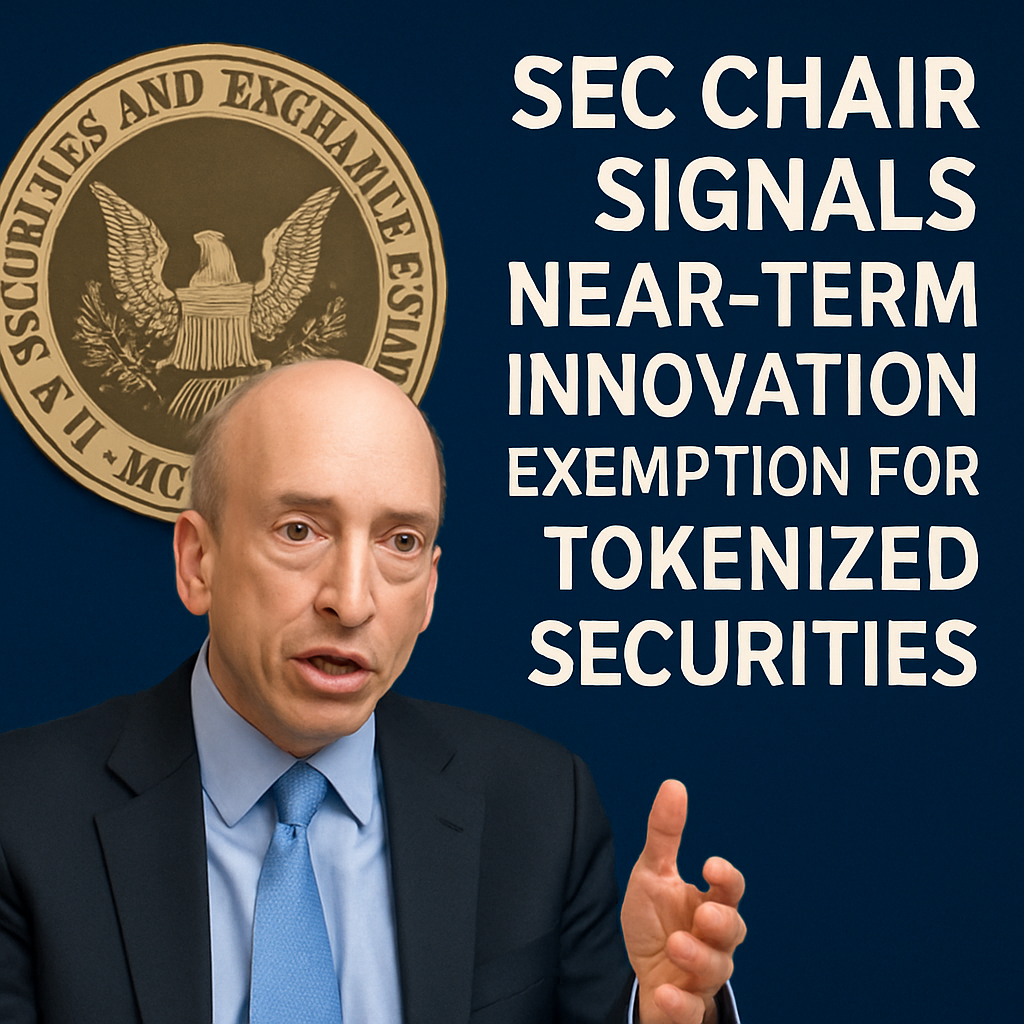
US Securities and Exchange Commission Chair Paul Atkins addressed the Economic Club of Washington, stating that the SEC is"on the cusp" of issuing an innovation exemption to enable limited on-chain trading of tokenized securities within a compliant regulatory framework. The exemption will permit market participants to initiate small-scale tokenized securities trading while the SEC finalizes comprehensive long-term rulemaking.
The innovation exemption will define eligibility criteria, trading limits and disclosure obligations for tokenized instruments. It will apply only to assets meeting specified custody, audit and reporting standards, ensuring that tokenized securities maintain parity with traditional securities under the Securities Act of 1933 and the Securities Exchange Act of 1934. The pathway reflects the SEC’s effort to reconcile digital asset markets with established legal structures.
Previous guidance from March 2026 introduced a token taxonomy classifying crypto assets into digital commodities, collectibles, tools, stablecoins and tokenized securities. The innovation exemption builds on that taxonomy by establishing a provisional safe harbor for tokenized securities transactions. Market participants will operate under temporary relief, with the SEC monitoring market integrity, investor protection and systemic risk factors during the pilot phase.
Commissioner Hester Peirce has supported targeted relief for tokenization, emphasizing the need for experimental flexibility under regulatory oversight. The pending exemption represents a significant shift from a strictly enforcement-driven posture toward enabling compliant innovation. It also advances broader objectives of Project Crypto, an SEC initiative launched in early 2026 to modernize digital asset regulation.
Release of the innovation exemption is expected within weeks, pending final internal reviews and White House consultation. Industry stakeholders anticipate that the exemption will accelerate institutional market development for tokenized securities and inform the design of permanent rules governing blockchain-based trading and settlement systems.
Comments (0)