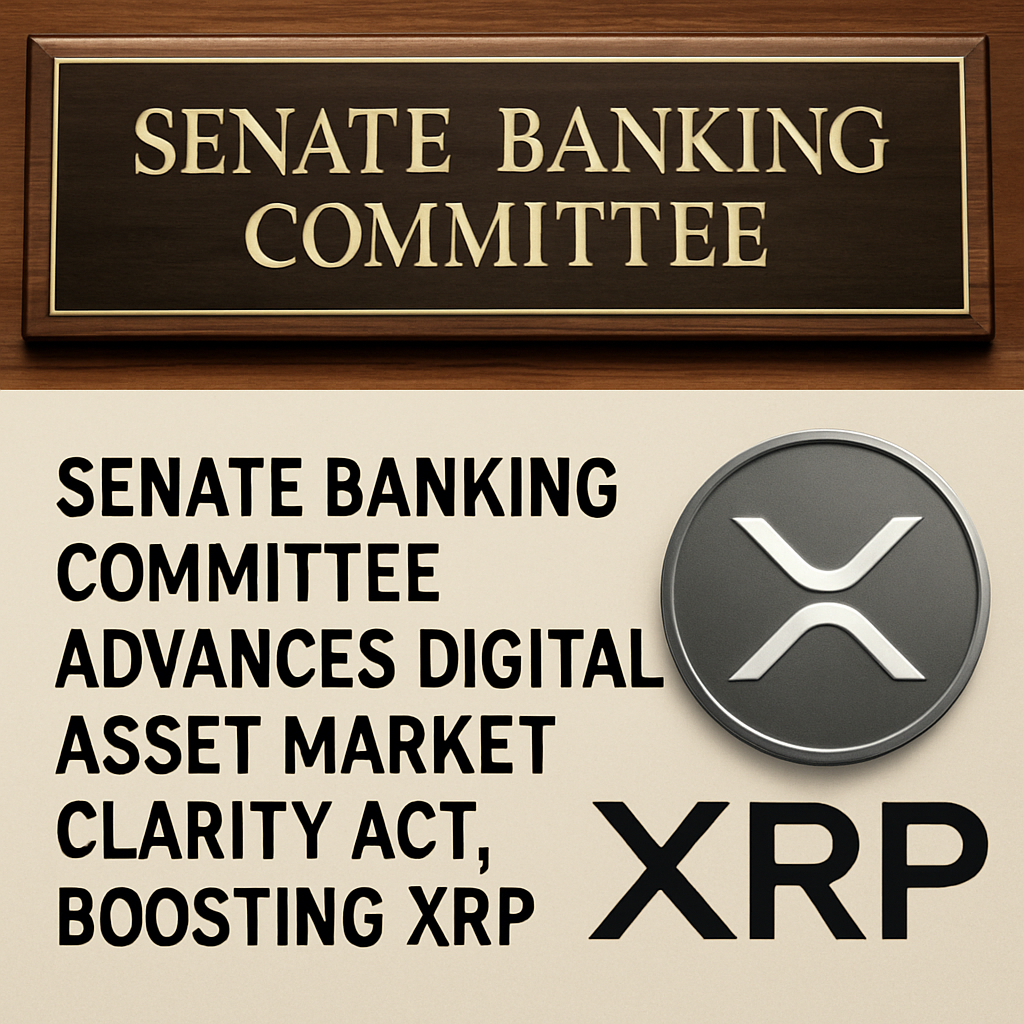
On May 16, the Senate Banking Committee approved the Digital Asset Market Clarity Act by a 15-9 margin, marking a significant step toward establishing a formal regulatory framework for cryptocurrencies in the United States. The bipartisan legislation aims to delineate clear supervisory authority between the Securities and Exchange Commission and the Commodity Futures Trading Commission, reducing long-standing jurisdictional ambiguity that has hampered market development.
The committee’s vote initiated a series of procedural stages, including floor debate and potential amendments, before a full Senate vote. Committee Chair Senator Tim Scott highlighted the Act’s role in fostering innovation and protecting investors:"This legislation provides a balanced approach, allowing digital-asset markets to thrive while ensuring robust investor safeguards," he stated. Ranking member Senator Elizabeth Warren emphasized the necessity of accountability for market participants, noting that the Act includes provisions to enhance transparency and consumer protections.
Market reaction was pronounced: XRP, which has been at the center of protracted litigation with the SEC, rallied 4% within minutes of the committee’s announcement. Analysts interpret the price action as a reflection of reduced legal uncertainty, potentially paving the way for exchange listings and institutional adoption. Other digital assets with utility token characteristics also posted modest gains, though broader market selling pressure limited overall upside.
Criticisms emerged around the bill’s scope, with some industry stakeholders arguing that the proposed definitions may still be too narrow to cover emerging token models. Nevertheless, the consensus view is that the Act represents the most comprehensive U.S. crypto legislative effort to date. Following the committee vote, market participants shifted focus to floor debate amendments, including potential changes to stablecoin reserve requirements and DeFi governance provisions. Pending passage, the Act could reach final Senate approval as early as Q3 2026, establishing a durable legal framework for digital-asset markets and setting a precedent for global jurisdictions monitoring U.S. policy developments.
Comments (0)