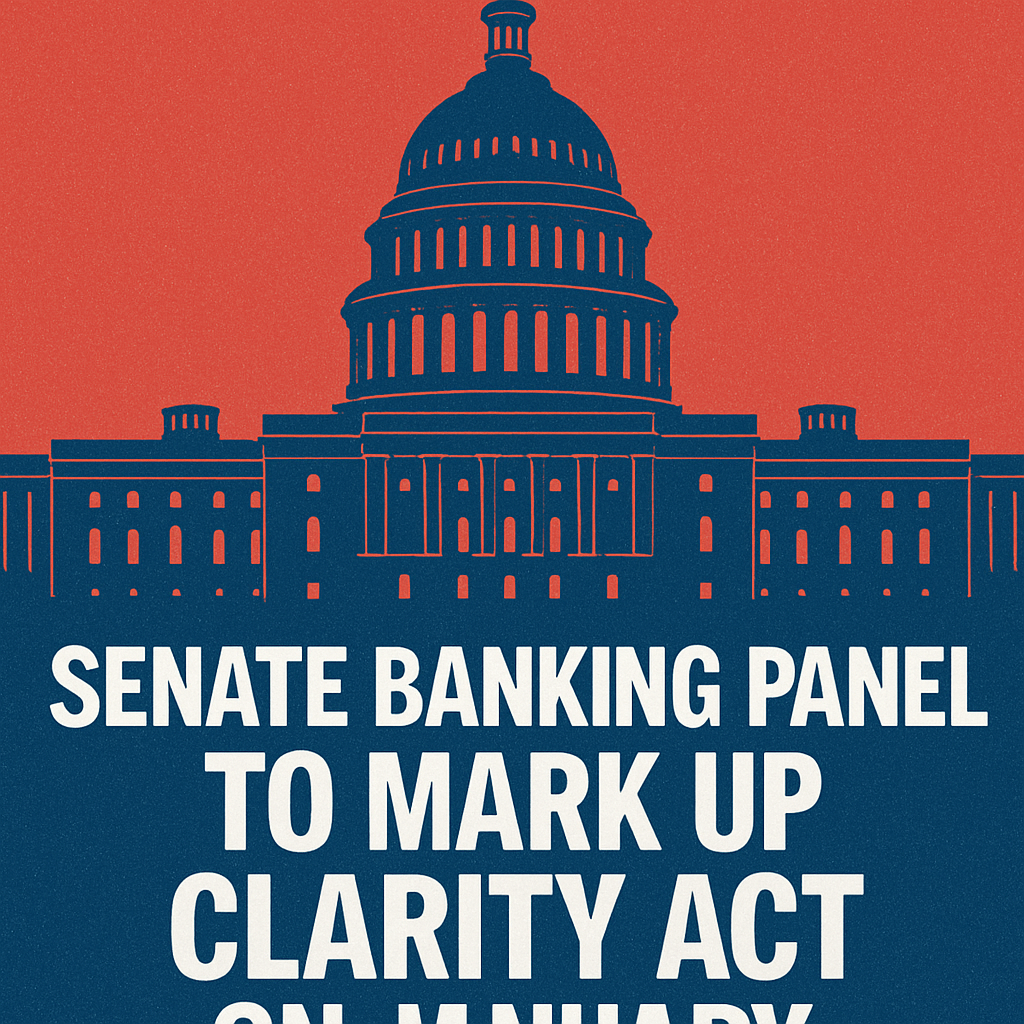
Legislative Milestone for Crypto Regulation
On December 31, 2025, Senate Banking Committee leaders announced plans to convene on January 15, 2026, for the first markup session of the CLARITY Act. This legislation aims to establish a comprehensive federal framework for digital asset markets, clarifying regulatory jurisdictions across the SEC and CFTC and defining key terms such as digital commodities, security tokens, and stablecoins.
Debate Topics and Key Provisions
The markup will address unresolved fault lines that delayed earlier progress. First, the treatment of DeFi protocols under existing securities laws will be examined, including whether automated, permissionless services require registration or can operate under issuer-based exemptions. Second, lawmakers will debate token classification criteria to differentiate digital commodities from tokens deemed securities, impacting exchange registration requirements and disclosure obligations.
Stablecoin provisions constitute a critical component. Proposals include limiting issuer reward structures, mandating reserve audits, and refining capital requirements to mitigate run risks. Advocates argue that compromise language drafted since the Congressional recess has narrowed differences, but staff acknowledge that additional amendments may surface during the markup session.
Bipartisan Dynamics and Voting Thresholds
Successful advancement from committee requires a majority vote. However, final passage on the Senate floor will demand 60 votes to overcome filibuster thresholds. Both parties face incentives to secure cross-aisle backing, as failure to achieve broad support could stall the bill indefinitely. Industry stakeholders and trade associations are actively engaging with committee members to advocate for provisions that balance consumer protection with innovation.
Impact on Market Participants
Enactment of the CLARITY Act would significantly reduce legal ambiguity for exchanges, brokers, and institutional custodians. Clearer registration pathways and defined regulatory authorities would facilitate compliance planning and capital deployment. Market structure reforms could also foster deeper liquidity, standardized reporting, and enhanced enforcement coordination.
For DeFi projects, codified rules may prompt governance protocol adjustments and on-chain transparency enhancements. Token issuers could benefit from clarified compliance requirements, reducing the risk of adverse enforcement actions. Investors may gain confidence from robust consumer safeguards and mandatory disclosures.
Next Steps and Outlook
The January 15 markup represents a pivotal moment for US crypto regulation. A favorable committee vote would set the stage for Senate floor debate in early 2026. Conversely, significant amendments or a negative vote could extend uncertainty. Stakeholders are monitoring committee schedules and preparing for potential public hearings and stakeholder testimony.
While legislative timelines remain fluid, the CLARITY Act serves as a barometer for US policy direction. Its progression will influence global regulatory dialogues and shape institutional adoption trajectories as the crypto sector enters a new regulatory regime.
Comments (0)