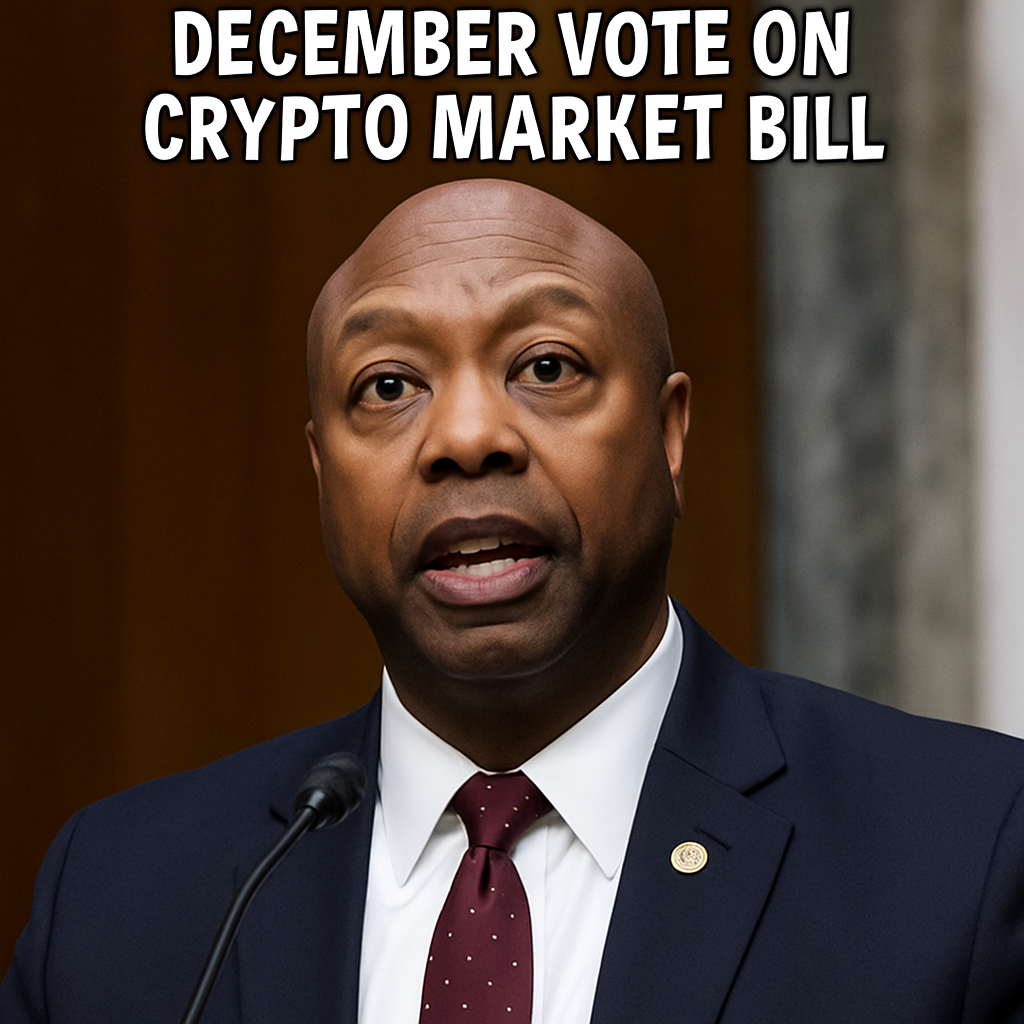
Senator Tim Scott, Chairman of the Senate Banking Committee, signaled renewed momentum for comprehensive crypto legislation by stating that committee markup of a market structure bill could occur in December. Scott’s remarks came during an interview on Fox Business, where he expressed confidence that bipartisan negotiations would produce a Senate version of the CLARITY Act, which was previously passed by the House in July. Scott aims to send the legislation to President Trump’s desk in early 2026, establishing the United States as a leading jurisdiction for digital assets.
The proposed Senate bill is expected to integrate provisions from the House CLARITY Act with discussion drafts released in July by Senate Republicans on the same committee. Key elements include defining the jurisdictional boundaries between the Commodity Futures Trading Commission and the Securities and Exchange Commission, clarifying which digital assets qualify as commodities versus securities, and setting investor-protection standards. By codifying regulatory authority, lawmakers hope to reduce uncertainty that has impeded industry growth and discouraged innovation.
Scott emphasized that achieving clear rules would unlock capital and foster responsible development in the crypto sector. In his statement, he praised efforts to marry the Senate’s market structure framework with the Agriculture Committee’s draft, which addresses CFTC oversight. He criticized delays caused by partisan disagreements but expressed optimism that a final compromise would emerge soon. Scott acknowledged that the Agriculture and Banking Committees hold joint jurisdiction, necessitating coordination to produce cohesive legislation.
Brian Armstrong, CEO of Coinbase, supported Scott’s timeline in a video posted to X, noting that clarity around market structure would benefit all digital asset companies. Armstrong highlighted that defined rules would reduce legal risks, enable new product launches, and attract institutional investors. Industry associations, advocacy groups, and leading exchanges have urged Congress to finalize the bill in light of digital asset adoption exceeding $4 trillion in market capitalization.
Once marked up by the Senate Banking Committee, the bill will proceed to the Senate floor and then return to the House for final approval if any amendments are adopted. With Republicans holding a slim majority in the Senate, supporters will need to secure at least 60 votes to overcome procedural hurdles. Lawmakers on both sides of the aisle recognize economic opportunities in crypto, suggesting that well-crafted legislation could pass with bipartisan backing. Industry stakeholders are closely watching Scott’s December markup pledge as a critical milestone for US crypto policy.
Comments (0)