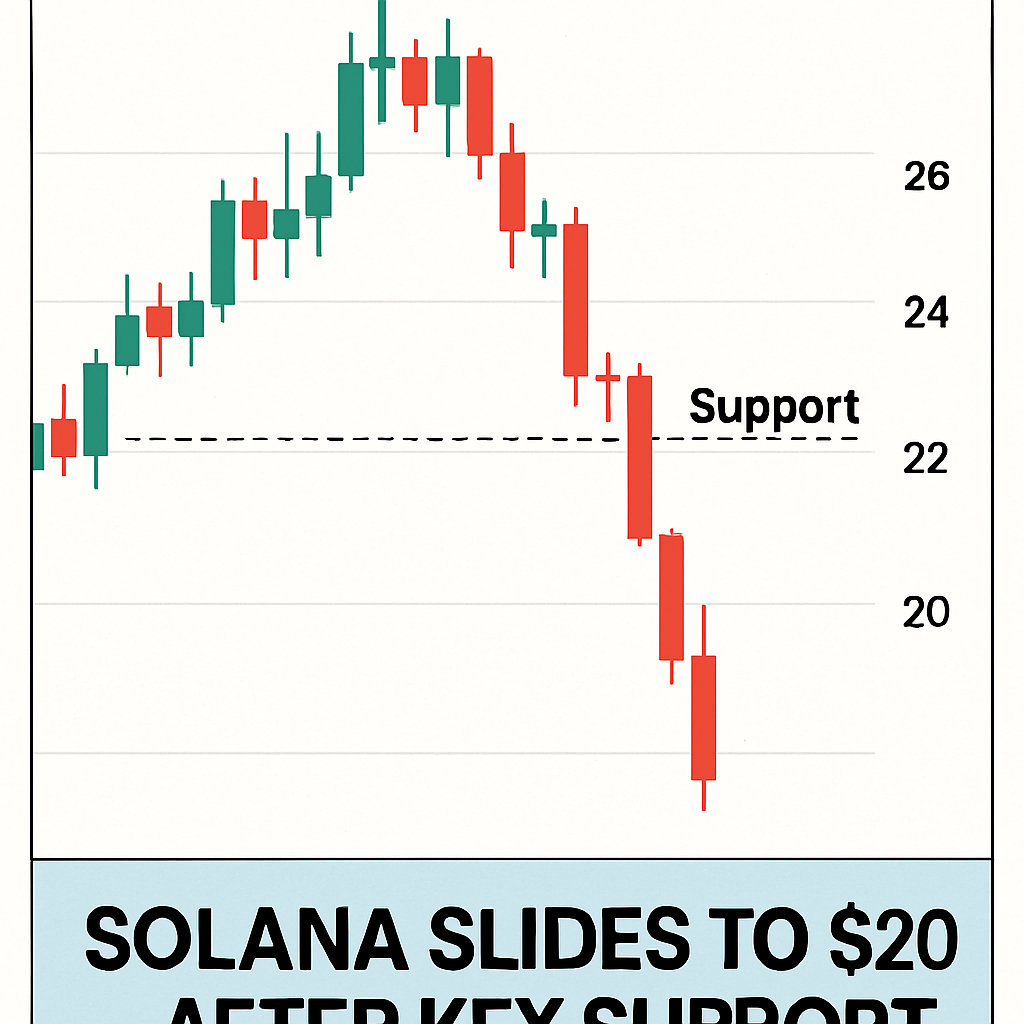
SOL extended its decline during Wednesday’s trading session, plunging from an intraday high of $153.03 to a low of $145.29 after breaching its critical $150 support level. Technical indicators signaled a clear breakdown, with each hourly candle printing lower highs and lower lows as selling pressure mounted during the final trading hours.
Trading volume for Solana rose to 2.49 million tokens during the collapse, representing a 157% increase over the daily average and underscoring the intensity of institutional distribution. Market data showed that stop-loss cascades accelerated the descent, with SOL falling nearly 5.24% within minutes as algorithmic orders were triggered below key chart thresholds.
Despite the price downturn, on-chain ETF flows painted a contrasting picture. Spot Solana exchange-traded funds saw their eleventh consecutive day of net positive inflows, led by Bitwise’s BSOL product, which added new capital even as SOL traded under technical pressure. Protocol inflows approached $369 million in total assets under management.
The divergence between fundamental demand and price action reflects a split market narrative. Institutional allocators remain bullish on Solana’s long-term architecture, citing robust developer activity and upcoming network upgrades. However, short-term traders are focused on risk management amid heightened volatility, positioning for deeper retracements if key floors near $142–$144 are lost.
Key technical levels to watch include immediate support at $142 and resistance at $157.25. A sustained close above $150 would be required to signal stabilization, while further declines could see SOL test lower zones around $135. Market participants are monitoring on-chain metrics such as active address counts and NFT market activity for evidence of renewed network usage, which could undercut bearish momentum.
Analysts highlight that Solana’s 30-day implied volatility remains elevated compared to historical norms, suggesting that market participants anticipate further price swings. A return to consolidation above $150 may attract short-covering and relieve pressure on derivative funding rates, which spiked as SOL funding turned negative across major perpetual swap venues.
On-chain data also revealed that large SOL wallets reduced staking positions during the downturn, liquidating staked tokens in anticipation of potential opportunistic buys if prices overshoot to the downside. This dynamic may create cyclical support if capital inflows resume at lower price levels.
Looking ahead, Solana’s next network upgrade, scheduled for December 2025, aims to improve transaction throughput and reduce fees. Supporters believe this event could act as a catalyst for renewed buying interest, though skeptics warn that macro-driven risk aversion may continue to weigh on SOL until broader market conditions improve.
In summary, Solana faces a critical junction between deepening technical weakness and sustained fundamental demand. The interplay between ETF flows and price action will be closely watched by both long-term holders and short-term traders as SOL seeks to reestablish support above $150.
Comments (0)