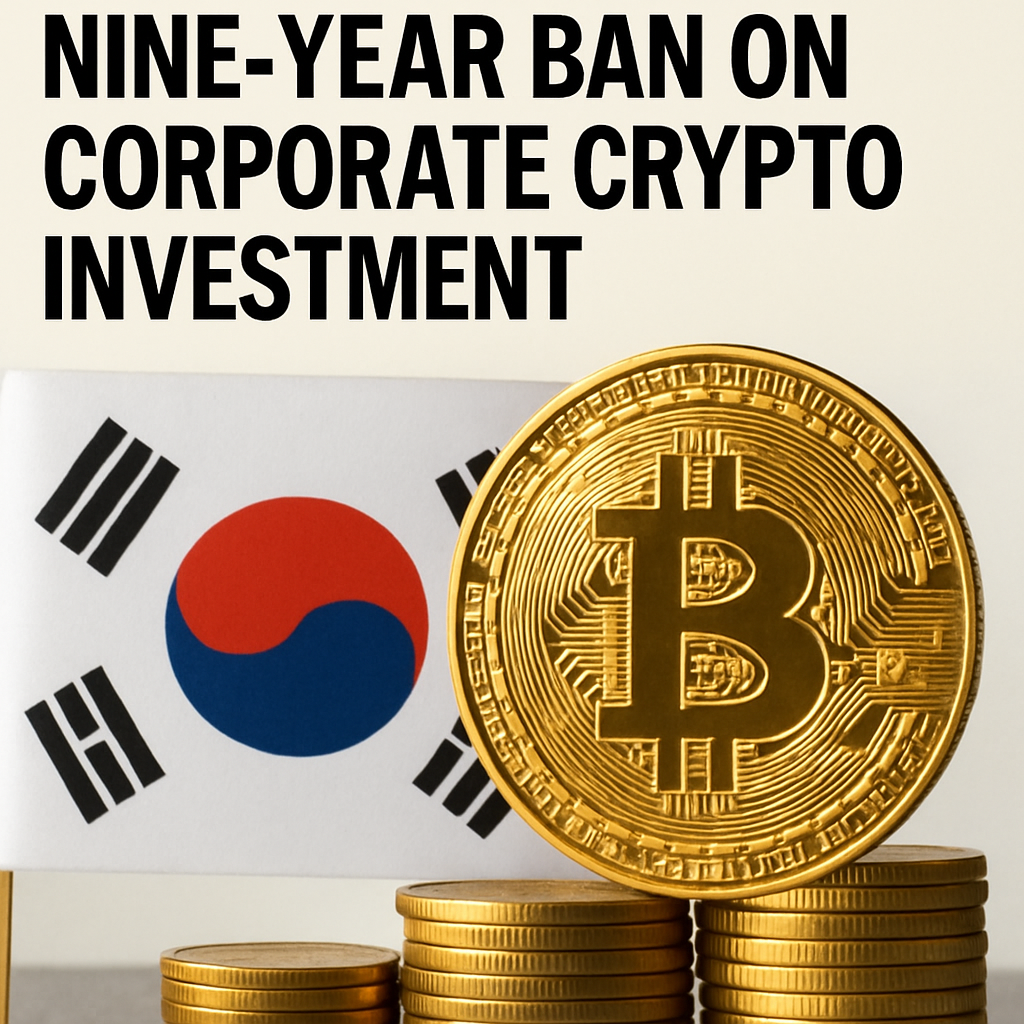
South Korea’s Financial Services Commission (FSC) has announced plans to overturn the nine-year prohibition that barred corporate entities from investing in digital assets. The updated guidelines, shared with the FSC’s crypto working group on January 6, will permit listed firms and qualified professional investors to commit up to 5% of their equity capital to the leading 20 cryptocurrencies by market capitalization. The measure, aimed at boosting institutional participation, represents a significant shift from the 2017 ban introduced amid anti-money laundering concerns.
Under the new framework, corporate investments must be executed through one of the country’s five largest regulated virtual asset exchanges. Transactions will require enhanced due diligence, including verification of corporate purpose and funding sources. Discussions are ongoing regarding the treatment of dollar-pegged stablecoins, with the FSC evaluating reserve-backing requirements and redemption guarantees to safeguard investor assets.
Local news outlet Seoul Economic Daily reported that final guidelines will be released in January or February, paving the way for immediate implementation. The phased approach will include a pilot program for non-profit organizations and academic institutions, followed by full corporate participation. The FSC has emphasized that anti-manipulation safeguards and monitoring mechanisms will accompany the rollout to prevent sudden price swings or pump-and-dump schemes.
Market observers anticipate that the regulatory easing could unlock tens of trillions of Korean won in new capital. Major conglomerates, such as Naver with its substantial equity reserves, may allocate a portion of treasury funds into Bitcoin, Ethereum, and other approved tokens. Acceleration of CBDC initiatives and approval of spot Bitcoin exchange-traded funds are expected as secondary outcomes of enhanced institutional demand.
Domestic blockchain startups and digital asset management firms stand to benefit from increased corporate treasury activity. Experts caution that liquidity management and risk assessment protocols will be critical for companies to avoid unintended exposure. The FSC has indicated ongoing collaboration with financial institutions to integrate real-name account requirements and advanced KYC procedures.
The reversal of the corporate investment ban marks a milestone in South Korea’s broader digital finance strategy, which includes a target of executing 25% of national treasury transactions via a central bank digital currency by 2030. As the industry adapts to the new regulations, stakeholders will closely monitor guideline finalization and the real-world impact on market dynamics and institutional adoption.
Comments (0)