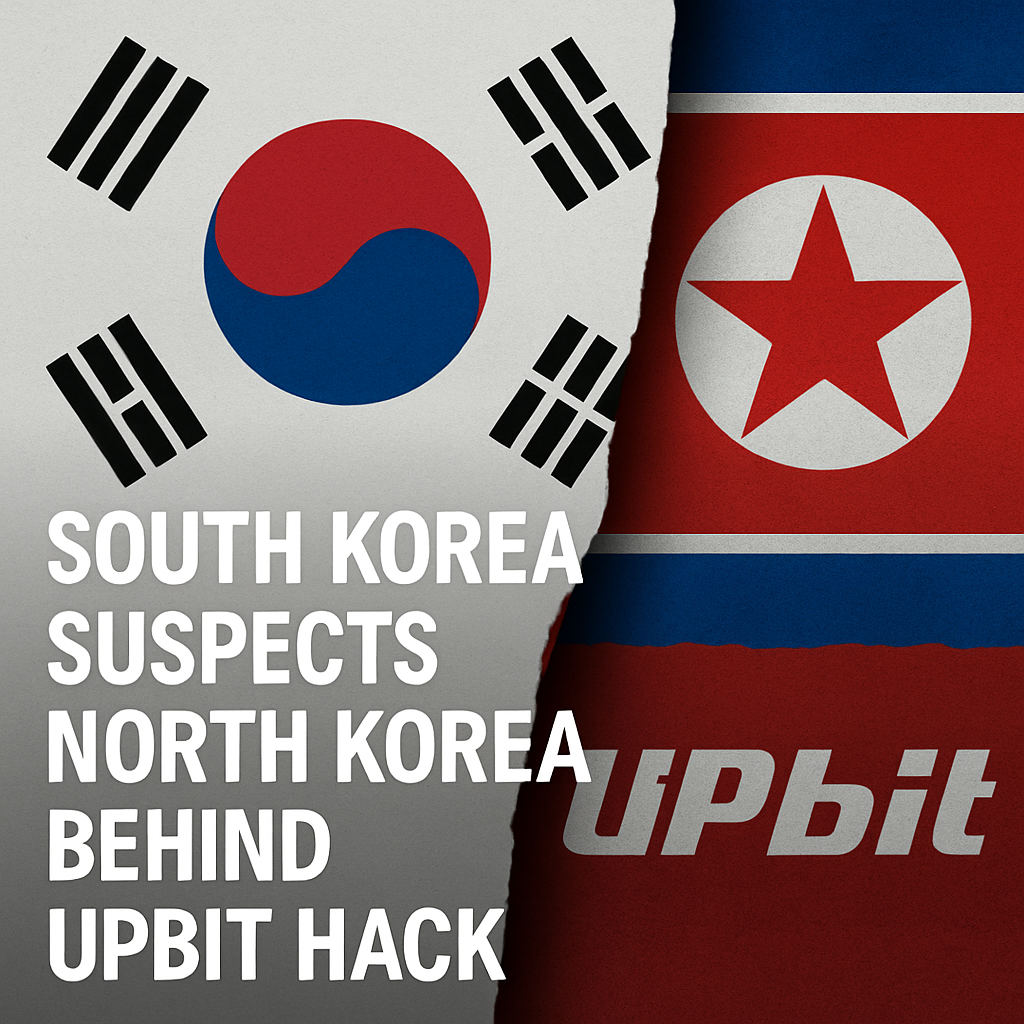
South Korean investigators launched inquiries following an abnormal withdrawal of 44.5 billion won from Upbit cryptocurrency exchange on November 27, 2025. The attack, detected by exchange security teams, triggered an emergency response involving the National Police Agency and National Intelligence Service.
Authorities suspect a North Korean-affiliated cyber unit known as the Lazarus Group orchestrated the heist by exploiting authentication protocols and system vulnerabilities. The incident bears striking similarity to a 2019 unauthorized withdrawal of 58 billion won, reinforcing attribution to the same advanced persistent threat actors.
Yonhap News Agency reported that investigators uncovered signature forensic evidence linking the intrusion patterns to tools and tactics previously employed by Lazarus operatives. Exchanges and regulators have intensified cooperation to trace the flow of funds through blockchain analysis and exchange checkpoints.
An unnamed official stated that the attackers bypassed multi-factor authentication and exploited a zero-day vulnerability in Upbit’s internal asset custody infrastructure. Exchange operator Dunamu confirmed ongoing system audits while reassuring users that recovered assets will be restored from insurance reserves.
The breach occurred mere hours before Naver Financial announced its proposed acquisition of Dunamu, the parent company of Upbit, in a deal valued at over 15 trillion won. The timing has raised concerns over due diligence and integration of cybersecurity measures in merger and acquisition processes.
Past incidents attributed to Lazarus include the 2016 theft of $81 million from Bangladesh Bank and multiple DeFi exploits. The group’s evolving arsenal blends spear-phishing campaigns, malware implantations, and smart contract manipulation, targeting exchanges, wallets, and blockchain bridges.
In response to the hack, South Korea’s Financial Services Commission vowed to accelerate regulatory guidelines on custodial standards and emergency incident disclosure. Market analysts anticipate increased volatility as institutional investors reassess risk, while retail trading volumes may face temporary constraints pending security reviews.
Blockchain security firm Chainalysis and other on-chain analytics providers have been enlisted to trace the stolen tokens, deploying proprietary heuristics to identify laundering pathways and exchange on-ramps. Collaborative efforts aim to intercept potential cash-out points and freeze assets across multiple jurisdictions.
The Upbit incident marks one of the largest hacks in 2025, renewing urgent calls for decentralized finance protocols to incorporate advanced security primitives, such as multi-party computation and hardware-based key management solutions. As the industry grapples with regulatory uncertainties and emerging threats, the importance of robust cybersecurity frameworks has never been more pronounced.
Comments (0)