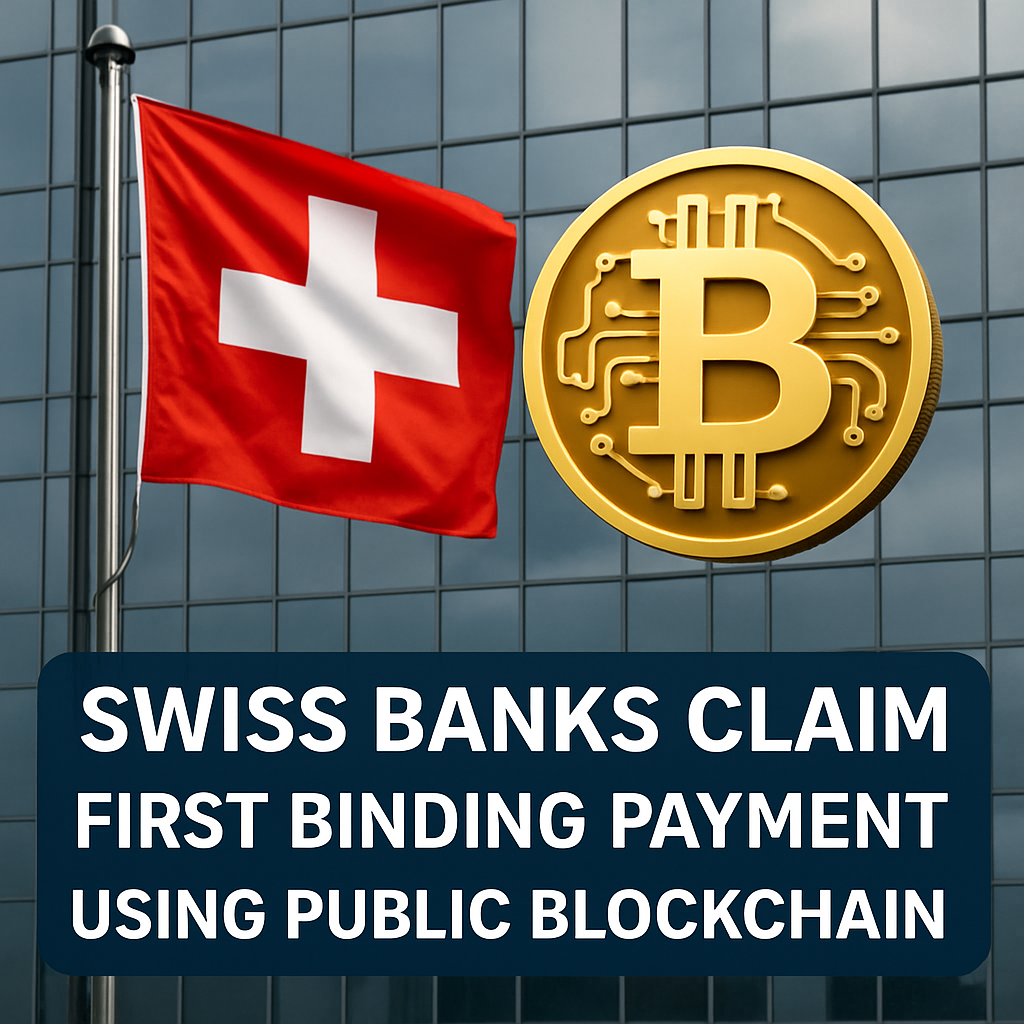
Three Swiss banks, including UBS, PostFinance and Sygnum Bank, successfully conducted a binding interbank payment using bank deposits represented as tokenized assets on a public blockchain. This transaction was executed as part of a joint feasibility study overseen by the Swiss Bankers Association and conducted on September 16, 2025. The pilots employed deposit tokens, which are blockchain-based representations of traditional bank deposits, enabling the settlement of payments on shared distributed ledger infrastructure.
During the study, participating banks transferred tokens representing underlying deposits across a public blockchain network. The payment achieved immediate finality and irrevocability, confirming that tokenized deposits can settle transactions definitively between institutions without dependence on traditional payment rails. Observations from the exercise demonstrated that blockchain-driven settlement processes could be seamlessly integrated into existing interbank workflows and automated business processes.
Thomas Frei, head of product innovation at Sygnum Bank, commented that the tokenized deposit model enables interoperability between different banking systems. He noted that while similar tokenization efforts have been undertaken by other institutions, including JPMorgan, those solutions remained siloed within single banking entities. By contrast, this collaboration proved that tokenized deposits can operate across diversified banking infrastructure on a public network.
The feasibility exercise also examined counterparty risk management and compliance controls within the blockchain environment. Results indicated that banks retained the ability to verify deposit backing and monitor risk in real time on ledger records. This transparency and traceability suggest potential efficiency gains and reduced reconciliation burdens compared with traditional correspondent banking processes.
Going forward, industry participants plan to refine the technical architecture, address regulatory requirements, and evaluate commercial use cases that leverage tokenized deposits. Potential applications include real-time treasury management, programmable payments in trade finance, and integration with smart contract–driven financial instruments. Continued testing will focus on scalability, interoperability standards, and governance frameworks to support broader adoption of blockchain-based payment solutions.
Comments (0)