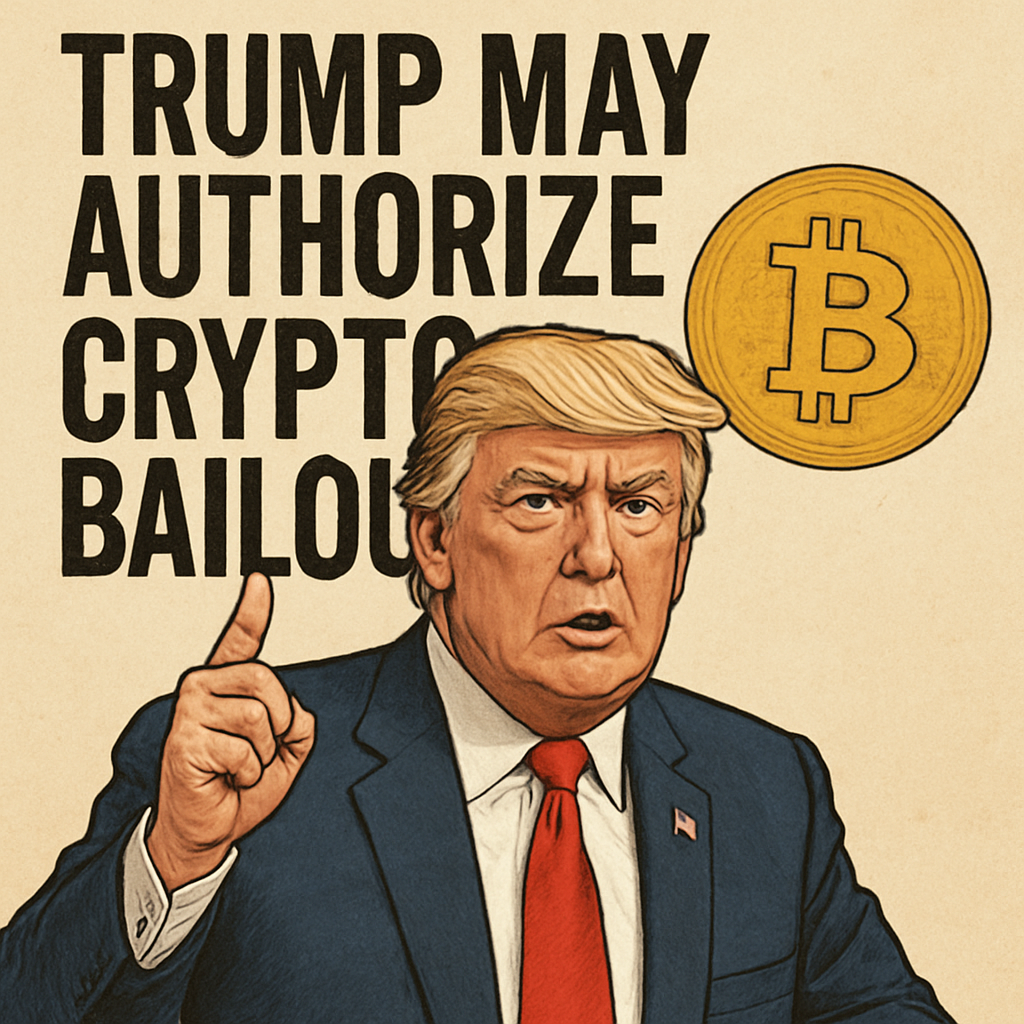
London, Dec 22 – Following a period of heightened integration between traditional finance and digital assets, President Donald Trump is poised to consider federal intervention in the event of a major cryptocurrency crisis in 2026. The possibility of a bailout hinges on the risk that a run on a large stablecoin such as Tether’s USDT or the collapse of a key exchange could trigger widespread market turmoil and pose systemic threats to the U.S. Treasury market.
Industry observers note that Trump’s administration has taken steps to bolster the legal and regulatory framework for dollar-backed stablecoins, positioning these tokens as integral components of the broader financial ecosystem. The president’s public support for legislation establishing clear guidelines for stablecoin issuance has contributed to a significant surge in digital‐asset valuations, with total market capitalization rising by over $1.2 trillion since his 2024 election victory.
Should a stablecoin fail to maintain its dollar peg, the resulting flight from that token would likely disrupt dollar-crypto pair trades, freeze liquidity, and create a cascading effect across decentralized and centralized venues. In such a scenario, the administration could deploy the Treasury’s Exchange Stabilization Fund to extend emergency loans against high-quality collateral, mirroring actions taken during past banking crises to stabilize markets and restore confidence among investors.
Alternatively, the Strategic Bitcoin Reserve and Digital Asset Stockpile—initiatives established earlier in 2025 to consolidate government-owned cryptocurrencies—could be repurposed to set price floors or provide direct market support, drawing on reserves estimated at up to 200,000 bitcoins. While these vehicles were originally designed to remain budget-neutral, executive authority could override that constraint to address acute threats to financial stability.
Experts caution that any intervention would carry significant political and economic implications. A substantial bailout would mark a departure from free-market principles championed by the cryptocurrency community, transforming an industry born as a protest against “too big to fail” into one reliant on government backstops. It would also demonstrate the administration’s commitment to safeguarding both the burgeoning crypto market and the broader national economy.
As 2026 approaches, market participants will closely monitor the resilience of major stablecoins and the operational integrity of leading exchanges. The prospect of a presidential bailout serves both as a reassurance to investors and a reminder of the evolving relationship between digital assets and U.S. economic policy.
Comments (0)