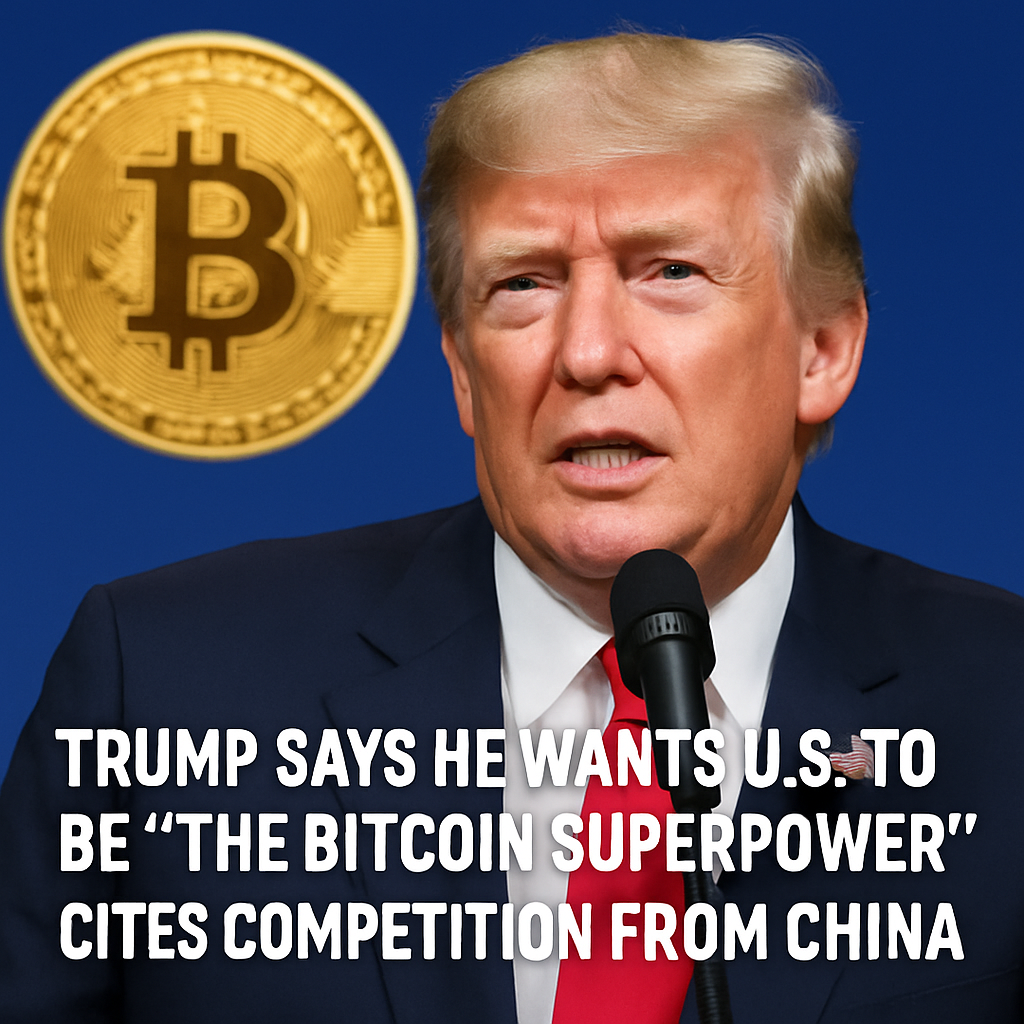
During a keynote address at the America Business Forum in Miami, President Donald J. Trump outlined a vision for the United States to emerge as the dominant nation in bitcoin and cryptocurrency innovation. He characterized prior federal policy as a “war on crypto” and stated that recent executive orders have reversed that stance, signaling a new era of government support for digital-asset industries.
Trump asserted that crypto technology reduces pressure on the U.S. dollar, framing digital assets as complementary to national currency and monetary sovereignty. He emphasized that business leaders and major enterprises are embracing the sector, describing crypto as a “big industry” with extensive opportunities for innovation, job creation and global competitiveness.
The president announced no specific timelines or regulatory roadmaps during the speech but highlighted past administration actions, including establishment of a Strategic Bitcoin Reserve and a U.S. Digital Asset Stockpile sourced from federal seizure proceeds. He contrasted his approach with that of the previous administration, accusing it of hostile enforcement against crypto innovators.
Looking ahead, Trump framed the ambition as a strategic imperative to outpace global competitors, particularly China, which has signaled significant investment in blockchain infrastructure and digital-asset development. He warned that failure to implement supportive crypto policies could cede leadership to rival nations and undermine U.S. influence in emerging financial technologies.
Commentary on the administration’s crypto stance noted the absence of formal guidance or rulemaking directives from regulatory agencies, leaving industry participants awaiting detailed frameworks on stablecoins, securities classification and consumer protections. Market observers anticipate further executive actions or legislative proposals to clarify the government’s role in overseeing and fostering blockchain innovation.
Trump’s remarks coincide with ongoing debates in Congress over market-structure legislation and stablecoin regulation. The president’s promise to potentially replace the SEC chair has drawn scrutiny, with stakeholders assessing the impact of leadership changes on enforcement priorities and capital markets oversight in the crypto domain.
Industry reactions have been mixed, reflecting optimism for renewed regulatory clarity paired with caution over political uncertainty and potential shifts in policy direction. Stakeholders are monitoring White House engagements with banking and fintech executives for signals on forthcoming guidance, rulemaking or public–private partnerships in the digital-asset space.
Comments (0)