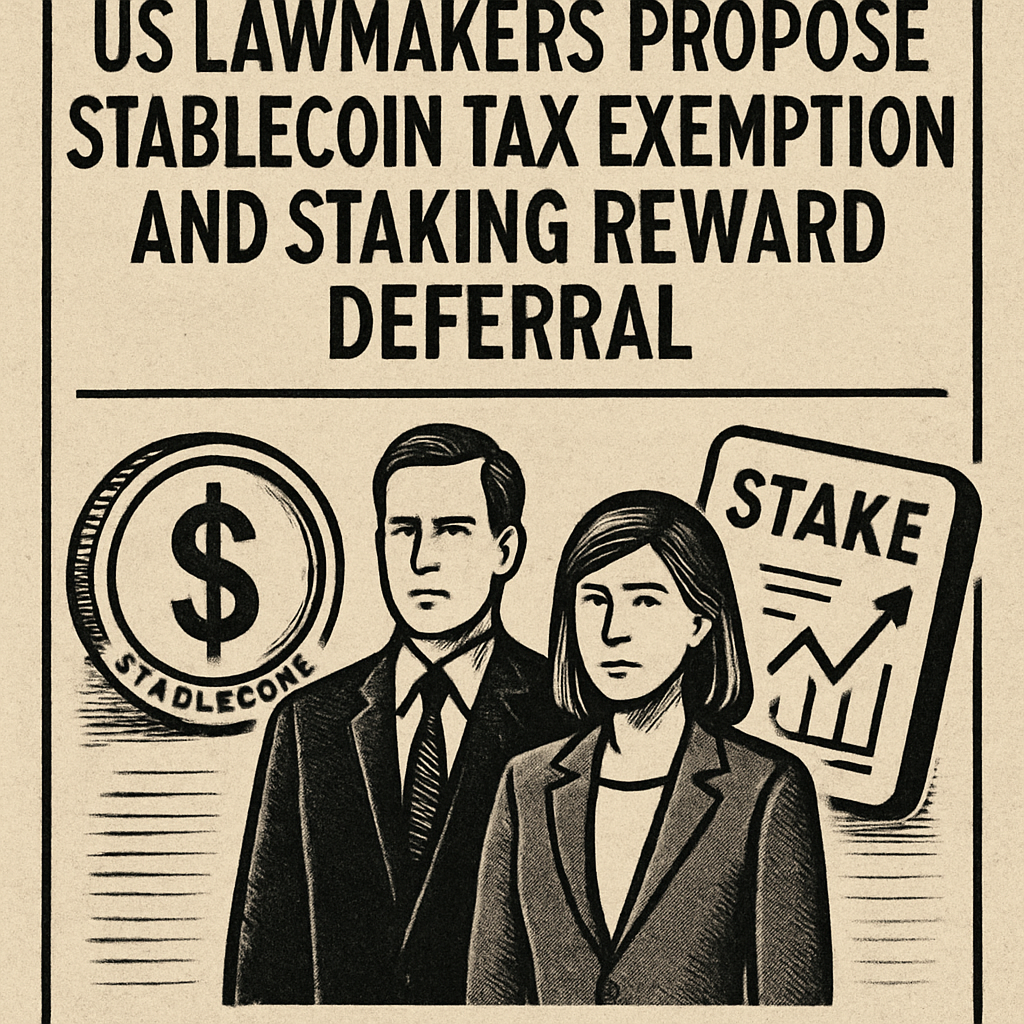
Representatives Max Miller (R-OH) and Steven Horsford (D-NV) introduced a discussion draft amending the Internal Revenue Code to address tax burdens on routine digital asset transactions. The draft exempts consumer payments in permitted stablecoins of up to $200 from capital gains recognition, provided the stablecoin maintains a tight peg and is issued under the GENIUS Act framework.
To prevent abuse, the exemption excludes trades executed by brokers, dealers, or when the asset trades outside the authorized price band. The Treasury would retain rule-making authority to issue anti-abuse regulations and reporting requirements.
Beyond payments, the draft addresses “phantom income” from staking and mining by allowing taxpayers to elect deferral of income recognition for up to five years. This mirrors deferral periods in traditional mining arrangements and balances immediate tax liability against deferral until disposition.
The bill also extends existing tax treatment for securities lending to certain digital asset lending, applies wash sale rules to actively traded crypto, and enables traders and dealers to elect mark-to-market accounting for covered crypto assets. These measures aim to modernize tax rules, reduce compliance costs, and align digital asset taxation with the asset’s payment and economic functions.
Industry groups, including the Blockchain Association, opposed expanding stablecoin reward restrictions to third-party platforms, arguing that such limits would stifle innovation and favor large incumbents. A recent letter by more than 125 companies warned against overbroad constraints that could hamper fair competition.
If enacted, the bill could reshape the tax landscape for retail crypto users, incentivize stablecoin adoption in everyday transactions, and ease tax treatment for staking and mining activities. Lawmakers and industry stakeholders will likely negotiate details before formal introduction in the 2026 session.
Comments (0)