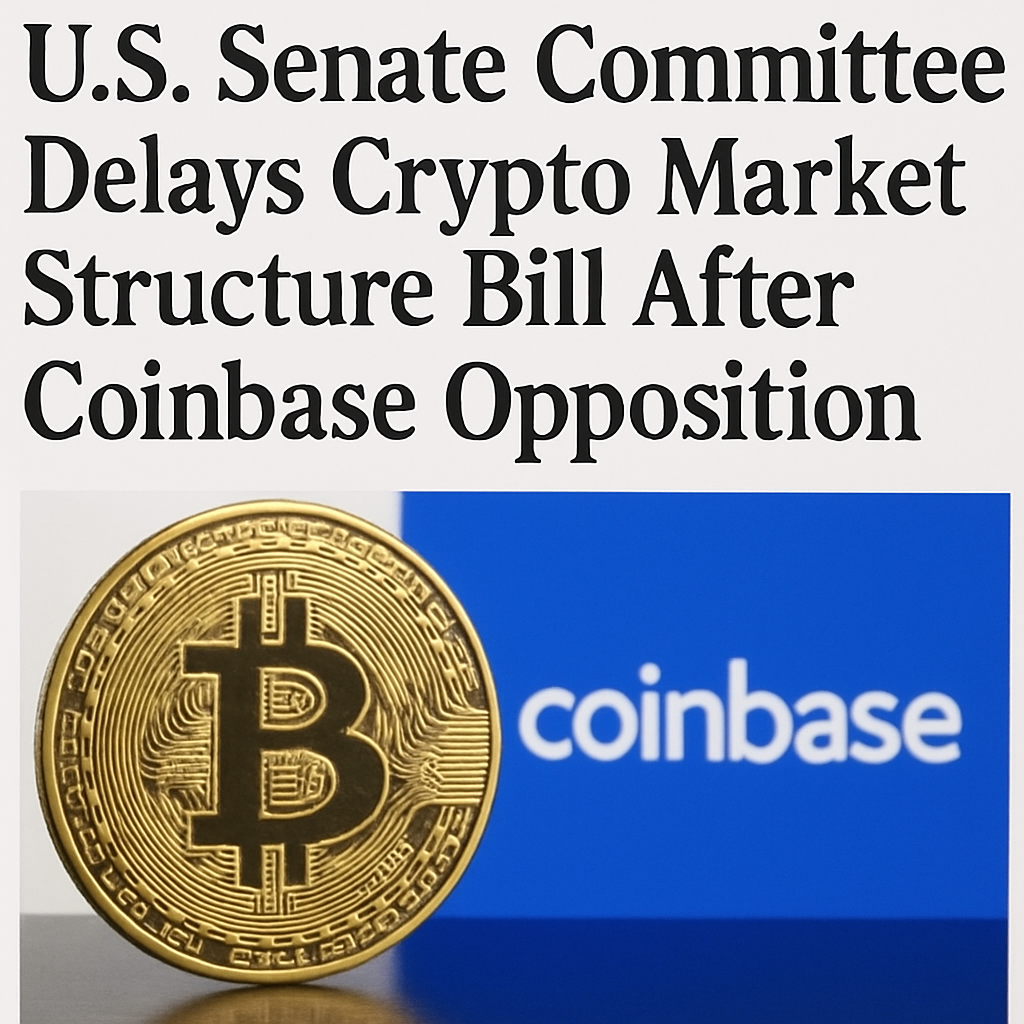
On January 15, 2026, the US Senate Banking Committee unexpectedly postponed a scheduled markup of the long-awaited Digital Asset Market Clarity Act, marking a major setback for efforts to enshrine comprehensive crypto regulation into law. The session, planned for Thursday, was cancelled late Wednesday following a public statement by Coinbase CEO Brian Armstrong that his company could not support the bill in its current form.
The legislation, first unveiled by the committee earlier this week, seeks to establish a clear regulatory framework for digital assets by defining when tokens qualify as securities, commodities or other asset classes. Under its provisions, the Commodity Futures Trading Commission would assume primary jurisdiction over spot markets for cryptocurrencies, reflecting the industry’s longstanding preference for CFTC oversight over that of the Securities and Exchange Commission. The act also would clarify disclosure requirements for token issuers and trading venues.
Armstrong’s opposition centered on three key issues: restrictions on tokenized equity offerings, which he argued would stifle innovation in digital securities; provisions limiting stablecoin incentives, potentially curbing customer yield programs; and language that could diminish the CFTC’s authority on derivatives markets. In a post on X, Coinbase’s CEO warned that a flawed bill could be “worse than no bill” and urged lawmakers to address outstanding concerns to avoid undermining the industry’s growth and U.S. competitiveness.
Committee Chairman Tim Scott emphasized that negotiations remain ongoing and expressed optimism that additional hearings and stakeholder consultations could bridge policy gaps. Scott noted bipartisan commitment to passing meaningful legislation this year but acknowledged that complex issues—such as anti-money laundering standards and the treatment of decentralized finance protocols—require further deliberation.
Market reaction to the delay was muted, with bitcoin trading near $96,500 and broader cryptocurrency indices holding steady pending clarity on the bill’s revised timeline. Analysts view the postponement as an opportunity for policymakers to refine language on stablecoin safeguards and digital commodity definitions, but warn that persistent gridlock could prolong legal uncertainty and stifle institutional investment.
With the US midterm elections looming in November 2026, the window for passage is narrowing. Industry groups and advocacy coalitions have intensified lobbying efforts to shape draft amendments ahead of any new markup date. Stakeholders stress that a balanced regulatory framework could unlock trillions in institutional capital, while a disjointed approach risks driving innovation offshore.
As legislators return to draft revisions, all eyes will remain on the Senate Banking Committee’s next meeting schedule and the potential formation of a bipartisan working group to reconcile divergent interests within the crypto ecosystem and the traditional financial sector.
Comments (0)