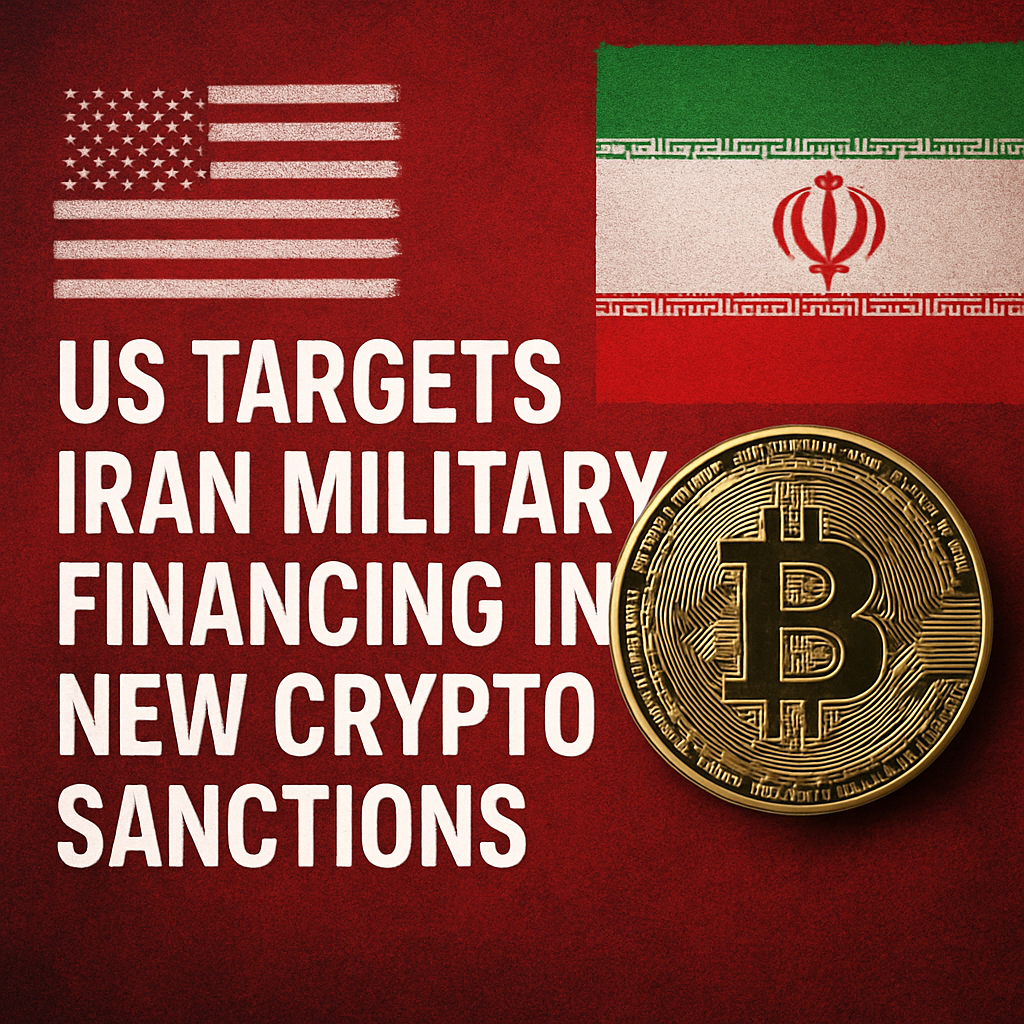
On September 16, 2025, the U.S. Treasury Department announced a new sanctions package targeting individuals and firms that facilitate cryptocurrency-based financing of Iran’s military. The measures specifically designate actors across Hong Kong and the United Arab Emirates who are accused of coordinating fund transfers from Iranian oil exports to benefit the Islamic Revolutionary Guard Corps (IRGC) Quds Force and the Ministry of Defense and Armed Forces Logistics (MODAFL).
The Treasury’s statement identified so-called “shadow banking” networks that use front companies and cryptocurrency to evade existing sanctions. By tokenizing proceeds from oil sales into digital assets and transferring funds through complex corporate structures, these entities sought to channel resources to Iran’s military apparatus. The sanctions bar any U.S. person or company from engaging in transactions with designated individuals and block assets within U.S. jurisdiction.
According to Treasury Under Secretary for Terrorism and Financial Intelligence John K. Hurley, the action reflects an ongoing commitment to cut off critical funding streams that support Iran’s weapons programs and malign activities in the Middle East. Hurley noted that crypto’s perceived anonymity makes it attractive to illicit facilitators, necessitating focused measures to address emerging threats in the digital asset space.
The sanctions follow a Trump-era executive order, National Security Presidential Memorandum 2, which aims to drive Iran’s oil exports toward zero and prevent acquisition of nuclear weapons. These new designations complement ongoing international efforts, including a snapback mechanism reimposing UN sanctions in response to Iran’s nuclear program violations. In 2024, sanctioned jurisdictions received $15.8 billion in illicit cryptocurrency flows, accounting for 39% of such transactions, according to Chainalysis.
The Treasury’s action underscores that digital assets will be subject to rigorous oversight and enforcement. It sends a clear signal to both sanctioned and non-sanctioned jurisdictions that the U.S. will leverage its financial authorities to counter the exploitation of cryptocurrency for terrorism financing and proliferation efforts. Enforcement agencies will continue to adapt their strategies as the digital asset ecosystem evolves.
Comments (0)