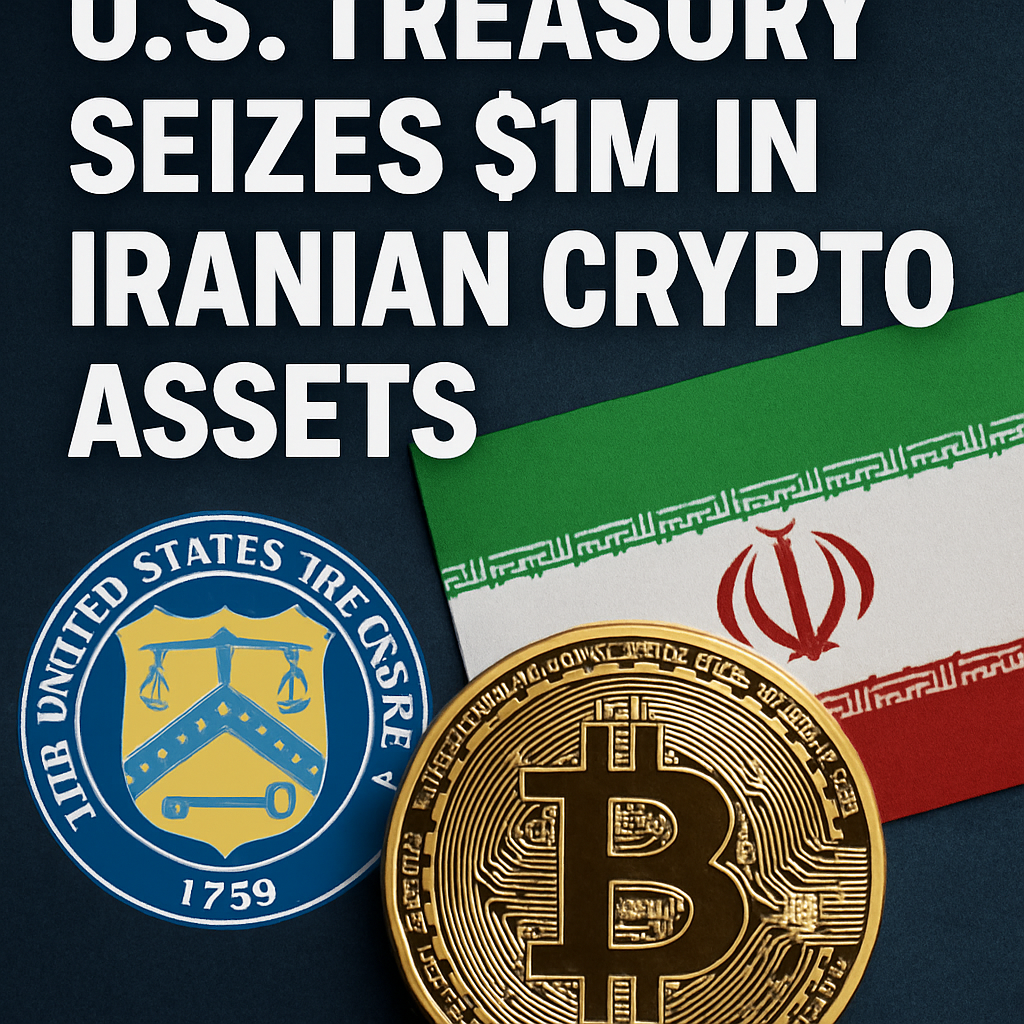
Operation Economic Fury, initiated by the United States Treasury in March 2025, aims to isolate Iranian financial networks by targeting cryptocurrency channels. Enforcement of this campaign has focused on identifying and freezing digital wallets associated with sanctioned entities and individuals. Treasury officials leveraged analytics and cooperation with private sector partners to trace illicit fund flows across multiple blockchain networks. The program operates in parallel with traditional banking sanctions to address gaps arising from decentralized finance innovations.
On Wednesday, Treasury Secretary Scott Bessent announced that the total value of seized Iranian cryptocurrency assets reached nearly $500 million. The figure surpasses the prior $344 million freeze disclosed by the Office of Foreign Assets Control. Seizures were executed through targeted designations against wallets linked to top Iranian officials and networks. Cryptocurrency firms and blockchain explorers were directed to implement compliance measures and restrict access to addresses subject to sanctions.
Enforcement measures have contributed to mounting pressure on Iran’s economy and banking sector. Since the launch of the campaign, the rial has depreciated by more than 60% against the US dollar and one state-backed bank collapsed amid liquidity constraints. Treasury assessments indicate that disruption of digital asset channels has hindered the regime’s ability to fund missile and drone programs, while secondary sanctions targeted shipping companies and intermediaries facilitating crypto-based transactions.
Latest seizures underscore the evolving role of cryptocurrency in geopolitical strategy and sanctions enforcement. Traditional banking restrictions are complemented by onchain surveillance, regulatory action, and interagency coordination. Industry participants are advised to enhance due diligence and monitor updated sanction lists as enforcement priorities expand to encompass blockchain-based methods of value transfer.
Comments (0)