Long-Term Outlook Anchored on Halving Cycle
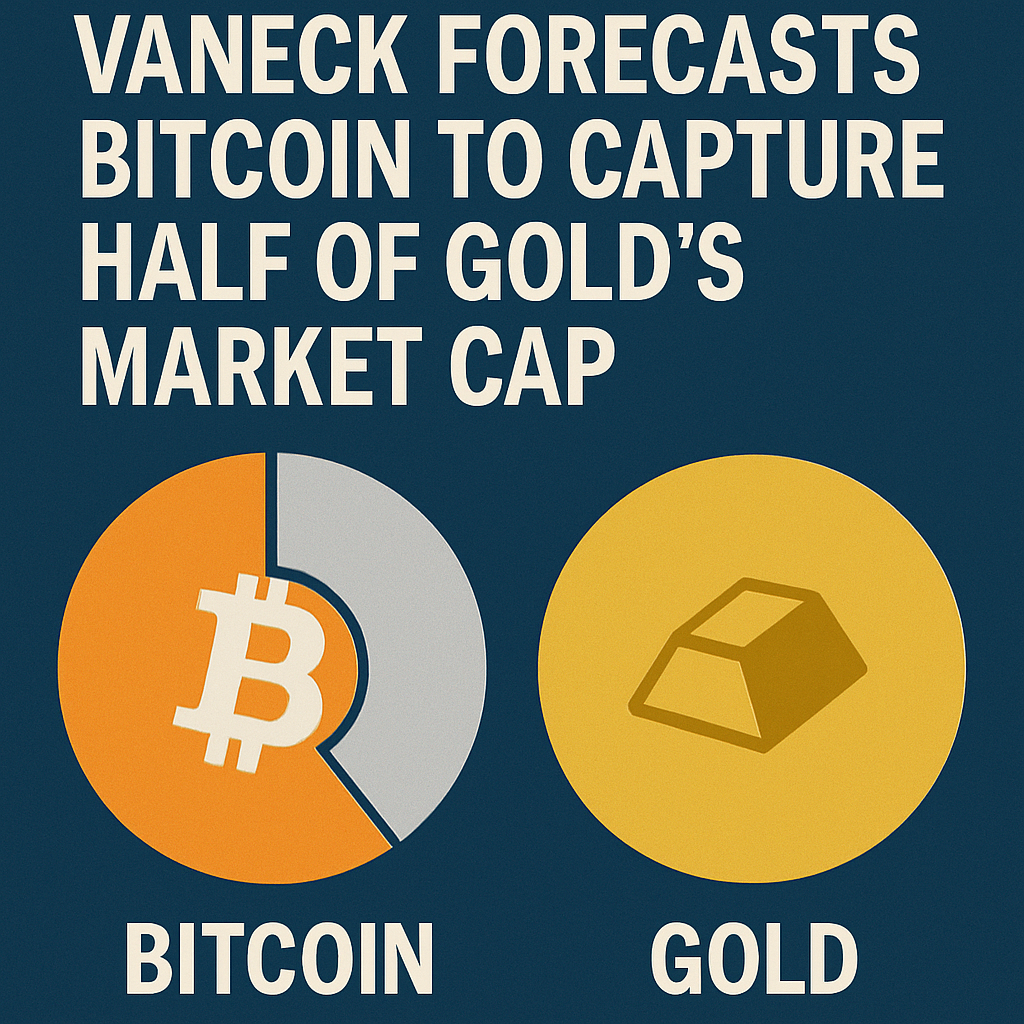
VanEck’s Matthew Sigel projects that Bitcoin may reach 50% of gold’s market capitalization following the next Bitcoin halving in April 2028. At current gold prices near $3,975 per ounce, this target implies an equivalent value of approximately $644,000 per BTC. The projection aligns with persistent inflation, monetary easing, and a weakening US dollar, which have lifted both store-of-value asset classes to new highs.
Shift in Store-of-Value Preference
Sigel attributes the potential market-share acquisition to demographic changes, noting that younger investors are increasingly favoring digital assets over traditional stores of value. As retail and institutional participation broadens in key emerging markets, Bitcoin’s network effect and capped supply may underpin its growing role alongside gold.
Gold’s own rally to record levels has underscored macro uncertainty and central bank policies. However, Bitcoin’s programmable nature and ease of global transfer present distinct advantages that could drive incremental adoption in sectors where gold has historically dominated.
Market Dynamics and Risks
- Volatility: Bitcoin’s higher price volatility may deter segments of the traditional investor base.
- Regulatory Uncertainty: Future policy shifts could alter institutional flows into both assets.
- Correlation Patterns: Despite diversifying appeal, Bitcoin–gold correlation remains subject to macro cycles.
Implications for Investors
A shift toward viewing Bitcoin as a complementary store of value could reshape asset allocation frameworks. Portfolio models that historically allocate to gold may increasingly incorporate Bitcoin to capture digital scarcity and growth potential. Strategic entry points may align with halving cycles, which have historically preceded extended bull runs.
Although the half-gold market-cap milestone remains contingent on sustained demand and macro conditions, the forecast highlights evolving perspectives on digital versus physical scarcity. As both markets mature, comparative analysis will become essential for investors navigating multi-asset portfolios.
Comments (0)