Committee Vote Details
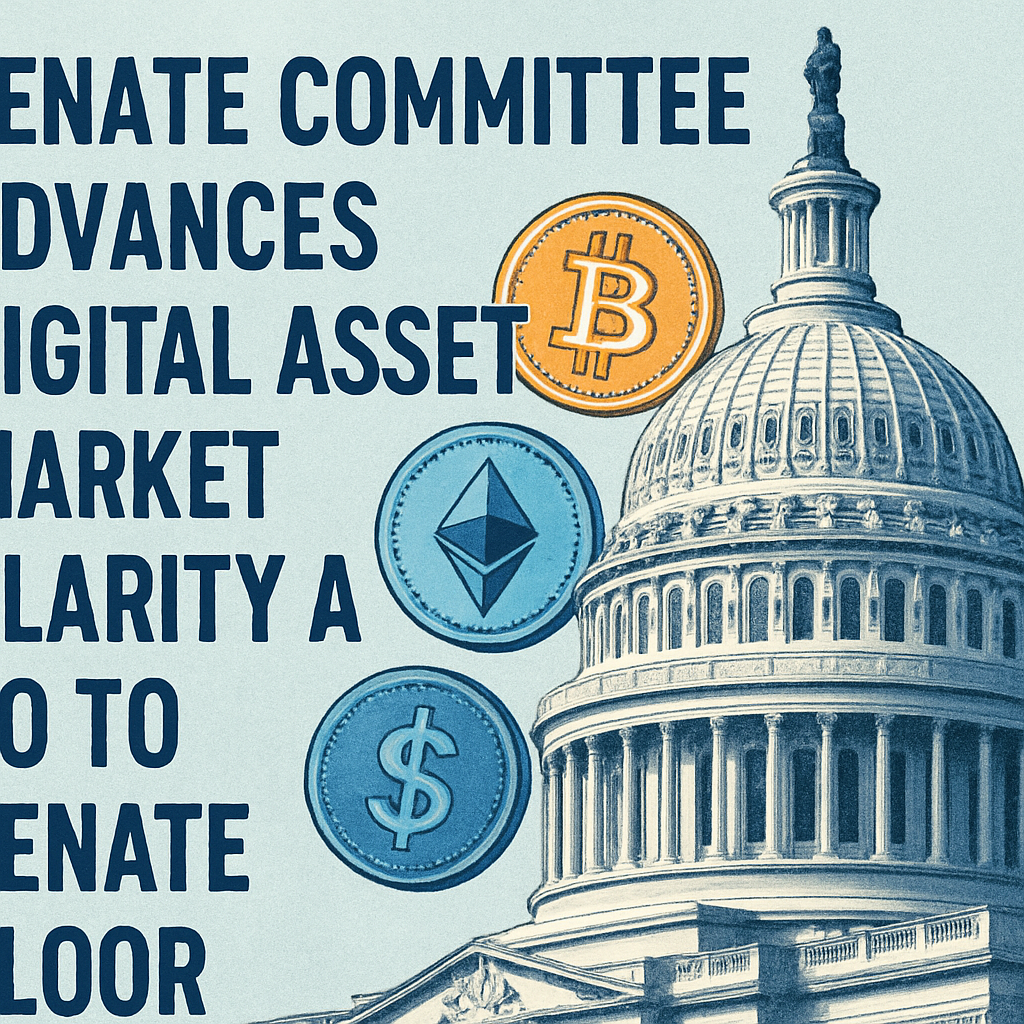
On May 14, 2026, the Senate Banking Committee held a landmark vote on the Digital Asset Market Clarity Act, passing the legislation by a margin of 15-9. The bipartisan outcome saw all Republicans and two Democrats endorse a regulatory framework designed to clarify federal oversight of digital assets. The act aims to delineate responsibilities between the Securities and Exchange Commission (SEC) and the Commodity Futures Trading Commission (CFTC), resolving years of jurisdictional ambiguity that has hindered industry growth.
Key Provisions Introduced
The bill outlines a three-tier asset classification system:"network tokens" such as Bitcoin and Ether fall under CFTC oversight, while security-like tokens requiring investment contracts are regulated by the SEC. Stablecoins are addressed with specific requirements on reserve transparency, capital, and consumer safeguards. The act also establishes a registration process for digital asset exchanges and includes provisions to enhance anti-money laundering monitoring across custodial and non-custodial platforms.
Political Dynamics and Dissent
Despite broad support, committee Democrats raised objections. Senators Elizabeth Warren and Sherrod Brown criticized the bill for insufficient consumer protection measures and cautioned against granting excessive yield-earning power to stablecoin issuers. Minority amendments proposing stricter know-your-customer and anti-money laundering standards were dismissed, heightening tensions between industry advocacy and financial stability concerns within the committee.
Industry and Stakeholder Reactions
Cryptocurrency firms and lobbyists heralded the vote as a crucial step toward legal certainty, with proponents arguing it will facilitate institutional investment and innovation. Banking associations and consumer rights groups expressed reservations, urging lawmakers to tighten stablecoin governance. Market observers anticipate careful scrutiny in the full Senate, where a 60-vote threshold will test the legislation’s bipartisan viability ahead of the November midterms.
Next Steps and Outlook
Following committee approval, the Clarity Act moves to the Senate floor for debate. Concurrently, the Agriculture Committee will assess the bill’s provisions related to digital commodity intermediaries—a reconciliation prerequisite before a final vote. Industry experts predict that the timeline for floor consideration and potential amendments will be pivotal to determining the act’s fate. Stakeholders emphasize that signing into law by year-end remains ambitious but achievable with continued cross-aisle cooperation.
Comments (0)