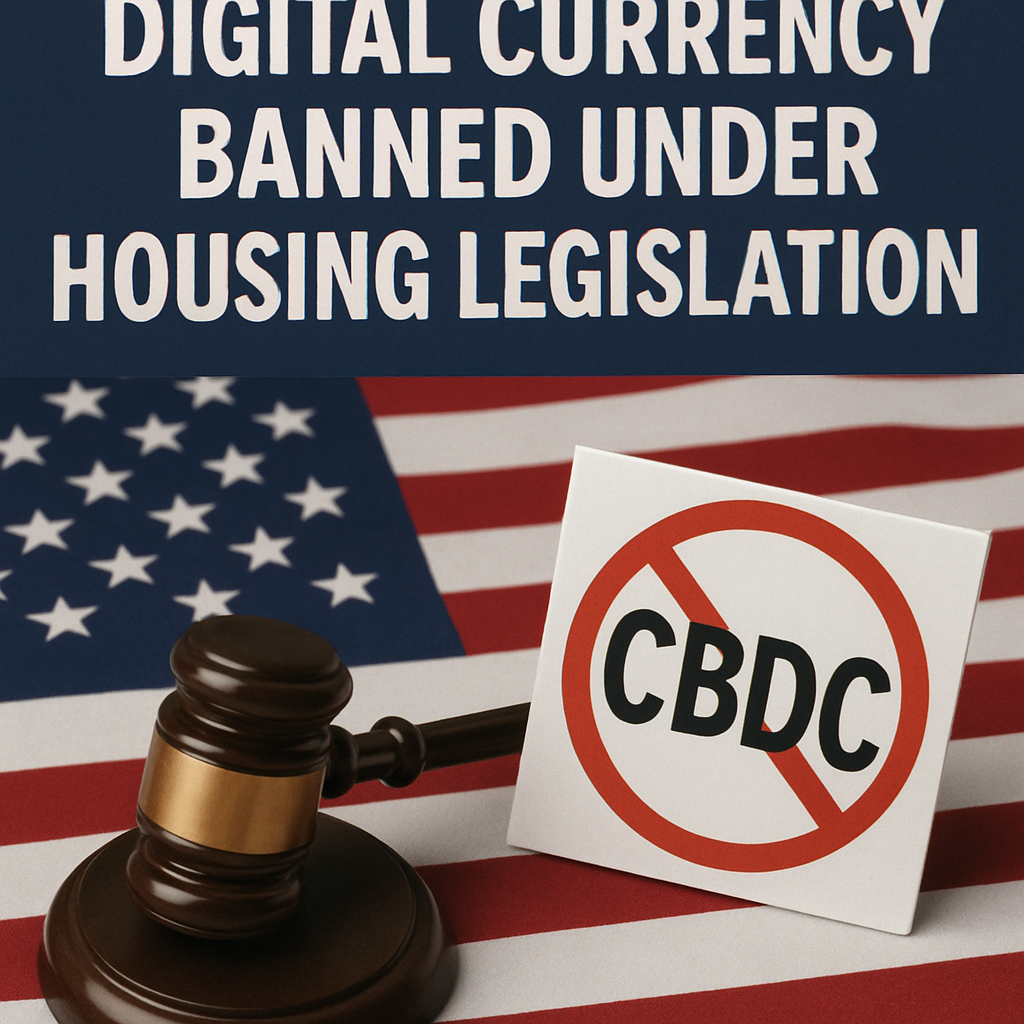
The U.S. housing-affordability legislation enacted a four-year ban on Federal Reserve issuance of a central bank digital currency (CBDC). The provision, unrelated to housing policy, restricts any development of a digital dollar that could compete with privately issued stablecoins. This ban takes effect at the first moment of the following day after presidential inaction.
Republican lawmakers advanced the CBDC prohibition amid industry concerns over potential government overreach and privacy implications. While the Federal Reserve had expressed limited appetite for a digital dollar absent explicit congressional authorization, this restriction ensures no preparatory work may proceed until the ban expires at the end of 2030. The move addresses crypto community opposition to state-issued digital currency competing with market-driven stablecoin solutions.
The constitutional mechanism triggered automatic enactment despite presidential refusal to sign the bill. Under Article I, Section 7 of the Constitution, any bill not vetoed within ten days of receipt becomes law. As a result, the housing bill provision now carries full force without executive endorsement. The outcome raises questions about future digital asset regulatory proposals and the potential for riders to influence policy outcomes.
Global counterparts such as the European Union and China have pursued CBDC initiatives. The U.S. framework diverges sharply, prioritizing protection of existing stablecoin ecosystems. Stakeholders view the ban as validation of private sector leadership in digital asset payment innovation. The decision sets a precedent for legislative barriers to central bank digital money in the United States.
Looking ahead, industry participants anticipate renewed debates once the moratorium lapses in 2031. Federal Reserve leadership changes and congressional dynamics will shape any future digital dollar trajectory. Meanwhile, private stablecoin providers may leverage the hiatus to expand market share, infrastructure, and regulatory compliance efforts in the regulated financial system.
Comments (0)