US Treasury’s Bessent Backpedals, Bitcoin Purchases Still Explored
Treasury Secretary Scott Bessent clarified that budget-neutral methods to buy Bitcoin for the Strategic Reserve remain under exploration. Earlier comments suggesting no further purchases triggered a market sell-off, wiping $55 billion from crypto value. The government also confirmed a halt on selling existing holdings.
XRP Breaks Key Resistance After Ripple-SEC Win Is $8 Next

XRP broke above key resistance at $3.27 on high volume after a legal victory in the Ripple-SEC case, signalling renewed institutional interest. Technical momentum suggests potential targets up to $8, driven by stronger market sentiment and regulatory clarity.
Google Play’s new rules won’t affect non-custodial crypto wallets
Google Play will require licensed status for custodial crypto wallet apps in over 15 jurisdictions, including the US and EU, effective October 29, but updated policy explicitly exempts non-custodial wallets from the new requirements.
US banks urge narrowing of stablecoin yield loophole in GENIUS Act
A coalition of U.S. banking groups led by the Bank Policy Institute has urged Congress to amend the GENIUS Act to close a loophole allowing stablecoin issuers to offer yield via affiliates and exchanges. They warned that failure to act could trigger up to $6.6 trillion in deposit outflows, destabilizing traditional lending markets and raising interest rates. The letter emphasizes that stablecoins must remain payment instruments.
Do Kwon pleads guilty to US fraud charges in $40B crypto collapse

Do Kwon, co-founder of Terraform Labs, entered a guilty plea to two counts of conspiracy to defraud and wire fraud in Manhattan federal court relating to the 2022 collapse of TerraUSD and Luna. Under a plea agreement, prosecutors agreed to recommend no more than 12 years in prison, though he faces up to 25 years. The hearing took place before Judge Paul Engelmayer on August 12, 2025.
Do Kwon Pleads Guilty to TerraUSD Fraud

Terraform Labs founder Do Kwon entered a guilty plea for commodities fraud, securities fraud, and wire fraud connected to TerraUSD. Court documents outline false claims about stablecoin stability and a plan that resulted in a $41 billion loss for investors. Sentencing scheduled for December.
President Trump Appoints Patrick Witt as Senior Crypto Adviser
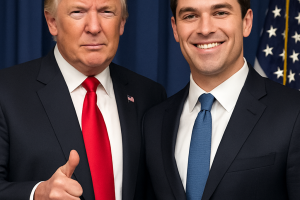
Yale alumnus and former quarterback Patrick Witt is set to succeed Bo Hines as executive director of the President’s Council of Advisers on Digital Assets. The move places a non-technical insider at the helm of U.S. crypto policy amid stablecoin regulation efforts.
Bithumb to Scale Back Crypto Lending Services After Regulatory Pressure
South Korea’s Bithumb exchange has halved its crypto lending leverage from 4× to 2× and cut maximum caps by 80%, reducing the cap from 1 billion KRW to 200 million KRW. The service, launched in July and briefly suspended on July 29, resumed on August 8 under stricter terms. Industry sources expect official guidelines by month-end.
Trump Media Files Amendment to Bitcoin ETF Registration, Crypto.com to Offer Custody

An amendment to the S-1 registration for Truth Social’s Bitcoin ETF was filed without specifying a fee or ticker. Crypto.com will act as custodian and liquidity provider, with Yorkville America Digital as sponsor. The filing added disclosures on airdrop policies and stablecoin risks.
Bo Hines departs White House Crypto Council
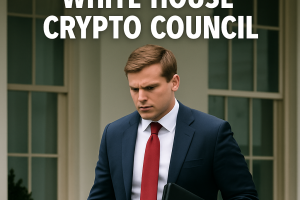
Bo Hines resigned as Executive Director of the White House Crypto Council after an eight-month tenure. His leadership advanced the Crypto Summit, the Genius Act and a market-friendly digital assets framework before he returned to the private sector.
White House expands 401(k) access to crypto and private assets with risk alerts
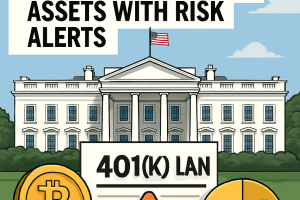
Executive order directs regulators to open 401(k) plans to alternative investments including cryptocurrencies, private equity and startups under new rules. Advisors warn of higher fees, reduced liquidity and disclosure gaps in these assets. Criticism emphasizes need for clearer safeguards.
Ripple News: Full SEC Lawsuit Timeline and XRP ETF Outlook
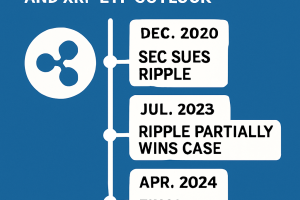
Ripple’s five-year legal battle with the SEC concluded on August 7, 2025, with a $125 million settlement. The case’s end has boosted XRP ETF approval odds to 77%, prompting asset managers to file or prepare ETF applications amid renewed regulatory clarity.
Ukraine to Introduce 10% Tax on Crypto Holdings Under New Bill
Ukraine’s parliament will review an EU-aligned crypto regulation bill in late August 2025, introducing a 10% tax on crypto holdings (5% personal income tax and 5% military levy). The bill also aims to enhance transparency and permit the central bank to consider crypto in national reserves.
China orders brokers to halt stablecoin promotion amid risk concerns

Chinese financial regulators have instructed major brokerages and research institutions to suspend seminars and publications promoting stablecoins, citing fraud and market stability risks. The guidance follows internal briefs issued in late July and early August.
SEC Staff Guidance on Liquid Staking Leaves Regulatory Questions Unresolved
The SEC Division of Corporation Finance’s new staff statement clarifies that liquid staking activities and receipt tokens do not inherently constitute securities offerings. Key legal issues around taxation and complex product structures remain unaddressed, leaving ambiguity for market participants.
SEC-Ripple Enforcement Action Ends After Joint Appeal Withdrawal
The SEC and Ripple Labs have jointly filed to dismiss both the regulator’s appeal and Ripple’s cross-appeal in the Second Circuit, concluding the enforcement action over XRP. The settlement preserves the prior judgment and ends one of crypto’s marquee legal battles.
NYDFS Fines Paxos $26.5M for Compliance Failures Tied to BUSD
The New York Department of Financial Services imposed a $26.5 million penalty on Paxos Trust Company for anti-money laundering and due diligence deficiencies linked to its past partnership with Binance on BUSD. Paxos will invest an additional $22 million to upgrade its compliance program.
Hong Kong’s New Stablecoin Law Faces Industry Pushback Over Stringent KYC
Hong Kong's stablecoin ordinance, effective August 1, mandates verification of every stablecoin holder’s identity. Industry participants warned strict KYC rules could deter global users and hinder the city's bid to become a digital finance hub, arguing it undermines stablecoin efficiency and privacy benefits.
Trump to Sign Executive Order Allowing Crypto in 401(k) Plans
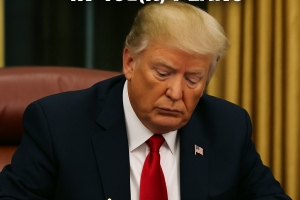
President Donald Trump will sign an order directing federal agencies to consider allowing private equity, real estate, cryptocurrency and other alternative assets in 401(k) retirement plans. The move aims to give defined contribution plans access to $12 trillion in assets but has drawn criticism over potential risks to savers’ portfolios.
With South Korea’s CBDC Plans Dead, KakaoBank Joins Stablecoin Gold Rush

KakaoBank is exploring entry into South Korea’s stablecoin sector following the halt of the central bank’s CBDC pilot. Bank plans include roles in issuance and custody, leveraging compliance expertise from prior crypto projects. Initiative aligns with new legislation enabling private stablecoin issuance.
China Warns Iris Scanning Crypto Project Over National Security Risks
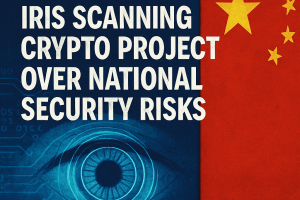
China’s Ministry of State Security warned of national security risks from foreign companies offering cryptocurrency incentives for iris scans, citing potential biometric data misuse abroad. The advisory appears directed at Worldcoin’s iris-based identity network amid regulatory actions in multiple countries. Concerns include data transfer to foreign entities and surveillance vulnerabilities.
Roman Storm Convicted for Operating Unlicensed Crypto Mixer Business

A Manhattan jury found Tornado Cash developer Roman Storm guilty of operating an unlicensed money transmitting business. Verdict leaves money laundering and sanctions charges unresolved, pending possible retrial. Storm remains free on bail pending sentencing.
China Warns Worldcoin-Style Iris Scanning a National Security Threat

China’s Ministry of State Security issued an advisory warning foreign firms against incentivizing iris scans with cryptocurrency, citing risks of privacy violations and national security breaches. The advisory, referencing projects like Worldcoin, highlighted concerns over biometric data transfers abroad and potential misuse for surveillance or deepfake operations.
Nomura-Backed Laser Digital Wins Regulatory Nod for Crypto Derivatives in Dubai

Laser Digital obtained approval under Dubai VARA’s pilot framework to offer regulated over-the-counter crypto derivative options, becoming the first entity to secure such a license. The firm will initially provide medium-dated options under ISDA agreements targeting major tokens. The license highlights Dubai’s growing appeal as a crypto-friendly jurisdiction.
Laser Digital Gains First VARA License for OTC Crypto Derivatives in Dubai

Nomura’s Laser Digital secured the first VARA pilot framework license to offer OTC crypto derivative services in Dubai. The license covers medium-dated options on major tokens under ISDA agreements. Dubai’s crypto-friendly regulations continue to lure global firms.
Binance CEO Files Motion to Dismiss $1.76B FTX Clawback Lawsuit
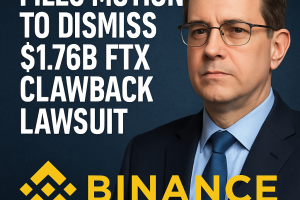
Changpeng Zhao filed a motion in a U.S. court seeking dismissal of a $1.76 billion clawback lawsuit filed by the FTX bankruptcy estate. The filing argues that the complaint fails to allege necessary legal elements for preferential or fraudulent transfers. The dispute stems from FTX’s collapse in November 2022.
SEC’s Peirce Defends Transaction Privacy Ahead of Tornado Cash Verdict
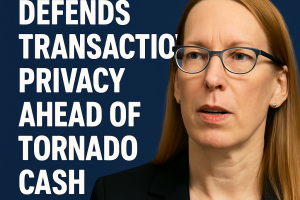
SEC Commissioner Hester Peirce issued a staff statement arguing that certain on-chain transaction privacy measures do not inherently violate securities laws. Her comments aim to clarify regulatory expectations as the Tornado Cash court case concludes.
Trump to Order Probe of Crypto, Political Debanking Claims: WSJ
According to the Wall Street Journal, former President Trump will direct a federal investigation into allegations of political debanking and discrimination against crypto businesses. The probe aims to assess whether banks improperly targeted clients based on political or industry affiliations.
Philippines SEC Cracks Down on Unregistered Crypto Exchanges
The Philippines SEC issued warnings to multiple unregistered crypto platforms, including OKX, Bybit, KuCoin, and Kraken. The regulator cited non-compliance with local licensing requirements and imposed cease-and-desist orders pending formal registration or withdrawal from the market.
CFTC to Allow Spot Crypto Trading on Registered Futures Exchanges
The Commodity Futures Trading Commission announced a plan to permit spot crypto asset contracts to trade on futures exchanges registered under its jurisdiction, coordinating with the SEC’s Project Crypto. Stakeholders are invited to comment on listing procedures in a designated market. The move aims to leverage existing federal authority to bring immediate regulatory clarity and expand institutional access to digital assets.
CFTC to allow listed spot crypto trading on registered exchanges
The Commodity Futures Trading Commission will permit trading of spot crypto asset contracts on registered futures exchanges, coordinating with the SEC under “Project Crypto.” This regulatory change follows the GENIUS and CLARITY Acts, providing clarity for digital assets. The move aims to enable immediate federal-level crypto trading and invites stakeholder input on listing mechanisms.
CFTC Faces Pressure to Probe Nominee’s Ties to Kalshi
U.S. Representative Dina Titus has called on the CFTC to investigate nominee Brian Quintenz over his links to Kalshi, a prediction market platform, amid concerns about potential conflicts of interest affecting regulator impartiality.
Banks Could Face Fines for De-Banking Crypto Firms Under White House Order
Draft executive order to penalize banks for closing accounts over ideological reasons, reviewing compliance with Equal Credit Opportunity Act and antitrust laws. Violators may face fines or consent decrees.
US Senators press housing watchdog on plan to count crypto in mortgage approval
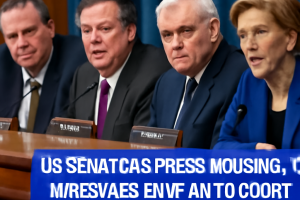
Five Senate Democrats asked FHFA director William Pulte to justify his directive ordering Fannie Mae and Freddie Mac to explore treating crypto assets as qualifying collateral. Lawmakers warned the move could introduce volatility and conflict-of-interest risks into federally backed mortgages.
US senators seek details on FHFA plan to count crypto assets in mortgage decisions
Five Democratic senators have demanded that FHFA director William Pulte justify his June order telling Fannie Mae and Freddie Mac to factor borrowers’ cryptocurrency reserves into mortgage-risk models, warning of volatility, conflicts of interest and systemic danger to the housing market.